“They Wouldn’t Easily Let Themselves Become Greenlanders”

In the last post I mentioned the Sumerian sexagesimal system. Quite remarkably, the Sumerian language used base 60 to count. Although not all their number words survive, many of their names for numbers up to five dozen are simple. That is, they don’t have a smaller scale structure to their words like English, for example, has. We have a slight tendency towards vigesimal in the fact that the teens are named differently than the twenties, thirties and so forth, so we have secondary structure in our own numerical vocabulary. Sumerian also has this, but it doesn’t break up sexagesimal. The numbers 7 and 9 translate literally as “five-two” and “five-four”, but this is sporadic and doesn’t reflect a system, although it may have done so in prehistoric times.

It’s hard to imagine a widespread modern language which used that many basic numeral words. These traces suggest that the Sumerian system used to be smaller, but in some ways this complexity is typical of what might be called “primitive” languages. The trend in most languages is from complexity to simplicity, but this leads to a quandary.

If you assume the Whig conception of history, which is of general progress towards the current social order, you’re presented with a depressing view of the past if progress is synonymous with improvement. We can look back on a decline of overt racism, sexism, homophobia and other identity-based prejudice, better conditions for workers, more tolerance, increasing care for the vulnerable and the like, and will be confronted with the idea that the past was utterly appalling in all sorts of ways. This is not actually how things happened. For instance, whereas Georgian Britain had the slave trade, the death penalty for homosexual acts and a general contempt for the needs of the poor, it was also less puritanical than the Victorian era, and in some ways that made it a better place to live. This is a major oversimplification of course, but it definitely isn’t a case of a terrible past trending towards a good present across the board.

A similar illusion afflicts the conception of language change. A lot of the time it really feels like languages are all becoming simpler and easier with the passage of time. Taking English as an example, we now have fewer strong verbs, we use “have” rather than “be” as the auxiliary for all past participles used in the perfect tense, we don’t use “thou” any more and many of our consonants in clusters have become silent, such as “knight” and “know”. The same process seems to take place in almost any familiar, widely spoken language you can think of. Latin is generally much more complex than any of the modern Romance languages, North Indian languages and Romani are way simpler than Sanskrit and Greek has become much simpler grammatically than it was in the Bronze Age. Sometimes this trend seems to be completely across the board, and it leads to a very odd apparent conclusion: that prehistoric languages were so complicated that it’s hard to imagine children being able to learn them at all.

We can only trace most languages back a little way into the Neolithic. Before that, the nature of languages spoken is highly mysterious. The oldest traceable languages are probably the Afro-Asiatic ones, which may be descended from a parent language spoken eighteen thousand years ago, which is Upper Palæolithic, also known as the Mesolithic. Further back lies the Nostratic hypothesis, which attempts to link a large number of language families together, but this is not accepted by mainstream linguists. It is very tempting though, and it leads to a language which looks very much like some Caucasian languages in form. It should be noted that the Caucasian languages do not form a single family, but they are nonetheless characterised by extremely complex grammar and many consonant clusters and types of consonant, sometimes with very few vowels. The extinct Ubyx, for example, had seven dozen and two consonants but only two vowels, which is a record number of consonants only exceeded by click languages.

Types of languages can be classified in various ways. One is word order, so for instance English is SVO, Subject-Verb-Object, Hebrew, Arabic and the surviving Celtic languages are VSO and Latin, Sanskrit and Turkish are SOV. However, a more relevant way of addressing types of language is in the complexity of their grammar. Languages can be analytic, fusional, agglutinative or polysynthetic. English is very close to being analytic. Its words vary very little and it often expresses cases, tenses and other inflections with prepositions and auxiliary verbs, which are approaching particles as with “should of” instead of “should have” and “gotta” for “must” or “have to”. However, English is not completely analytic (also known as isolating), because for example it still has mutation plurals such as “teeth” and participles formed by adding suffixes. Mandarin Chinese is closer to this state, with even plural pronouns being expressed using a separate “word”, which is in fact a bound morpheme but is very regular, being the same for their words for “we”, “you” and “they”. Chinese tends to be thought of as a purely monosyllabic language but it’s also been stated that the mean number of syllables in Mandarin is “almost exactly two”. This is because of things like words for “insect” which can only be used together, the plural marker for pronouns being considered a separate word and the tendency to think of separate vowels as diphthongs. Nonetheless Mandarin and the other Chinese “dialects”, which are of course really separate languages, are particularly good examples of analytic languages.

Fusional languages have affixes and other changes in word form which tend to express more than one idea with a single change. Most Indo-European languages are fusional. English, for example, expresses both plurality and possession by adding an S on the end of nouns. It’s easier to illustrate this in other Indo-European languages. German “der” and “die” are fair examples of this. The former is used both for the feminine and plural genitive and the latter for the feminine nominative and accusative and the plural nominative and accusative. As well as being fairly characteristic of Indo-European languages, there’s also a tendency for non-Indo-European languages not to be fusional. The trend from fusional to analytic is evident in English in its current state, with relatively few but some strong verbs. Fusionality probably makes languages harder to learn as second languages whether or not one’s first language is fusional.

Somewhat similar to fusional languages are agglutinative ones. Turkish and Finnish are agglutinative, and so is Esperanto. Agglutinative languages have separate morphemes for each expressed idea whose forms change little when they’re added to words. Finnish is quite agglutinative but tends to weaken some of its suffixes, changing double consonants to single. Agglutinative languages may be able to express entire phrases in single words, as with the Finnish “tottelemattomuudestansa” – “because of your disobedience” (that may be misspelt). Agglutination and fusion are both features found in languages which are generally considered to be in the other class, so for example the Indo-European Armenian uses agglutination with nouns but not elsewhere and general word-building in English and many other fusional languages is also agglutinative, with something as simple as “everyday” being an example. Agglutinative languages can be seen as descended from analytical languages but tending to run their words together in a way which has become enshrined in grammar.

The final class of language is known as polysynthetic, and these are what I’m mainly going to talk about today. Polysynthetic languages have entire sentences as one word. There are other languages which are able to do this, and clearly one-word sentences exist in English for example, such as “go”, “yes”, “hello” and so forth, but in polysynthetic languages these are the norm. The title of this post, “they wouldn’t easily let themselves become Greenlanders” is a single word in Iñupiaq, one of the languages of the Inuit. Incidentally, I’m not going into the politics of why they’re sometimes called “Esquimaux” here because it’s more complex than might at first appear. For reasons which might be connected to sociolinguistic features of polysynthetic languages, most first-language speakers or English, Castilian, German and the like are more likely to quote references to such words rather than be able to form them themselves, because these are not common second languages. The above phrase is from an edition of the Encyclopædia Britannica and its original Iñupiaq is lost to me. One that I can retrieve, by copying unfortunately, is the Mohawk example of “tkanuhstasrihsranuhwe’tsraaksahsrakaratattsrayeri” – “the praising of the evil of the liking of the finding of the house is right”. This fifty letter word is said to be one of any number of Mohawk words of unlimited length, because Mohawk is a polysynthetic language. This, by the way, is why it cannot be true that the Inuit have many words for “snow”. It’s more that they have many words, some of which mention snow, but they could equally well be said to have lots of words for anteaters, animals for which the Arctic is not renowned. In fact I’m not sure they have a straightforward way of referring to anteaters, but I hope you take my point. And the problem here is that knowledge of polysynthetic languages outside their communities is usually sparse.

There’s some controversy as to what constitutes a polysynthetic language. One important aspect is polypersonal agreement in verbs. Swahili and other Bantu languages have this. The Swahili verb inflects for the object as well as the subject, so “nimekuosha” means “I washed you” and “sikukuosha” means “I didn’t wash you”, four or five words in English and a complete sentence with subject and object. However, what Swahili does not do is incorporate nouns into the verb phrase, and it’s probably this which makes a language truly polysynthetic. It’s easy to understand how it could happen. Just as Latin has “amo, amas, amat” and the like, where “-at” refers to “she/he/it/this/that” and probably a lot else, so could a language, instead of in a sense incorporating pronouns, actually use nouns as part of the verbal inflection, and that’s the point when it counts as a polysynthetic language. Incidentally, although I contrast “polysynthetic” with agglutinative and fusional here, and using the last two to refer only to non-polysynthetic languages, polysynthetic languages can in fact be fusional or agglutinative themselves, and will actually be one of these, or tend towards being one or the other.

Now, one of the surprising things about polysynthetic languages is that whereas there are globalised and industrialised nations with official languages of all sorts of typology, there are absolutely no countries at all with main official polysynthetic languages. Examples of the others are easy to find. Malay, Indonesia and China have isolating languages. European nations mainly have fusional languages. Finland, Turkey, Georgia and Hungary have agglutinative languages. Many of these nations have no indigenous polysynthetic languages in any case, but some have. There are in fact no polysynthetic languages at all which are widely spoken in terms of area or numbers, although there have been in the past. The exception to all this is Nahuatl, the language of the Aztec Empire, which currently has 1.5 million speakers. Apart from that, only Navajo and Cree are spoken by more than a hundred thousand people, and in fact “spoken” may be the operative word here because most polysynthetic languages have few literate speakers. It’s also notable that those three examples are all spoken in North (and Central) America, and at one point in the nineteenth Christian century it was thought that polysynthesis was a distinctive characteristic of American languages.

This last point might conceivably be why there are so few widely-spoken examples. If it really was a feature of America, the genocide visited by White people on Native Americans could explain this distribution. There are also many Australian aboriginal languages of this type, but again a similar process took place on that continent. Many Papuan languages are polysynthetic, but in this case it could be simply due to the wide variety of languages spoken in Papua. In Eurasia, most such languages are spoken in Eastern Siberia and this includes Ainu, which is a special case and also a potentially informative case study. The only European such languages are the Northwest Caucasian ones. They also seem to be absent from Afrika, at least insofar as Bantu languages are not considered under this heading due to not incorporating nouns. What is going on here? The situation often seems to be that marginalised, low population indigenous peoples such as the Ainu, Iroquois, Inuit, those of the Amazon and Siberia and Australian Aborigines, all tend to speak polysynthetic languages, in small groups isolated from the rest of the world and tend to be conquered by larger powers, particularly Westerners but not always: the Japanese, Chinese and Arabs have also done this. By contrast, all the powerful nations speak other types of language. Why?

Linguistic complexity is associated with small, isolated and stable communities with dense social networks, i.e. where everyone knows everyone else. The density of a social network can be measured by dividing the number of links between people in a community by the number of possible links. Where the result is high, the network is dense. Such groups are socially cohesive, stable and have few external contacts. Languages associated with these are relatively rarely learnt by outsiders, but before I go further on that, what exactly constitutes an outsider?

There are three orders of social network involvement. The first order consists of people linked to each other. This is the core. The second order comprises people who are linked to the first order but not the central members. The third order is of people with no direct connection to the first order zone. This seems to contradict the idea of six degrees of separation, but in fact there could be an exponential growth in possible zones four to six.

As stated above, I’ve had to raid reference works to come up with examples of words from polysynthetic languages because I’m not familiar with even one of them. I’m conscious of the occasional word from Nahuatl used in English, and Iñupiaq words like igloo, anorak, umyak and kayak, but no serious words from the languages themselves not used internationally. This is not just me. It’s because they just don’t speak much to outsiders. In the case of the Inuit, this may be due to being in a very hostile environment in small groups,and the same applies in Siberia and the Amazon. Elsewhere, it isn’t as obvious what’s going on.

One suggestion is that second language learners lead to the language becoming simpler for first language learners too, because there are certain things they just can’t manage. If that’s so, it means that the use of second languages is more normal than it seems to be for most first language English speakers today. It’s possible that the intermarriage outside communities would lead to something a little like creolisation, only not to the extent of borrowed vocabulary or mixture of languages.

Social networks often have “hub” people, who link people who don’t know each other together. Sarada and I became aware of a mutual acquaintance soon after we met who is definitely one of these, and I think I’ve experienced the influence they have over language in their own way. A few years ago, I used to edit a newsletter and used the word “planet” to refer to Earth in order to give a sense of unity and vary my use of language, and they found this usage peculiar, probably due to their world view, which separated the mundane from the celestial and reflected their negative view of science. It became very difficult to insist on retaining the use of the word, which contrasted with how it was used outside our community but in, for instance, associated pressure groups such as Greenpeace, Friends of the Earth and also in the Green Party, and I think this was probably a minor example of how hub people, sometimes inadvertantly, exert pressure to keep language use in a particular form, which can be both innovative and conservative, and I suspect similar forces are at play here

The lack of literacy, and its possible imposition from without, may also be a factor. If a whole community doesn’t use writing or read at all, it may not divide utterances into words in the same way as a literate one would. English has been strongly influenced by widespread literacy, which has changed the pronunciation of certain words to be more in line with spelling, such as “again” and “often”. If foreigners came into a linguistic group and decide on where the words are divided, they may make different decisions than the native speakers might. In the case of Nahuatl, the very nature of its writing was not close to how other cultures are literate. In fact, pre-Columbian Nahuatl has often been considered not to have a writing system at all in spite of the fact that it had paper and books with pages. It used ideograms and was also partly based on wordplay (such as “bee leaf” for “belief” would be in English), similar to how proto-writing worked in Bronze Age Mesopotamia. Aztec codices are reminiscent in some ways of graphic novels. In parts of Siberia, letters were written in pictures representing the situation, such as a crossed-out vertical spear to express not being able to see someone because they were beyond the horizon. In a culture using this kind of graphical communication, it seems possible that they didn’t particularly think of themselves as using words.

The same situation is likely to be familiar to a hearing parent using spoken language with a young child who is not deaf. Their early language use is unlike mature speech in various ways, including using phrases which they don’t analyse into words, and only later does this emerge. For instance, one of our children used to refer to an untidy scene as a “what a mess”, and to a ball as a “make a ball”, and a child of one of our friends used to say “hat on” and even “hat on on” for “hat”. Many English speakers will be aware of young children saying “wassat” as if it’s one word. If the influence of the idea of short, separate words was entirely absent, it’s easy to imagine a whole culture continuing to do this. Another example is our daughter saying “Llater” for “see you later” with a voiceless “Welsh” LL at the start. This can extend into adulthood even in English. One quoted example is “azeniayuenionya?” – “has any of you any on you?” as a request for loose tobacco. In a way, maybe it’s we who misunderstand the nature of spoken language and we imagine we’re saying the latter rather than the former. Another one is my text-speech like “cuinabit” – “see you in a bit”.

Celtic and Sanskrit are both known for their tendency to merge spoken words into each other, such that the unit of speech for a speaker of those languages may not actually be the word so much as the phrase. It’s also been suggested that French is on its way to becoming a polysynthetic language. It contains clitics, which are word-like morphemes which depend on full-fledged utterances and therefore cannot occur on their own. There has long been a major discrepancy between the spelling and pronunciation of French, and it shares with modern Celtic languages a connection between consecutive words in speech. Phrases such as «je te l’ai dit» and «je ne sais pas» come across differently in speech than writing, and considered as words are “zheteledi” and “zhensepa” in my made up on the spur of the moment orthography. Coming across French anew as if it were an unknown language, one might regard “di” as the stem of the verb, “-e-” as the sign of the perfect tense, “-te-” as the third person objective prefix and “zhe-” as the first person subjective. “Zhensepa” also has the “n-pa” circumfix which indicates the negative, and there are others such as “n-zhame” for “never” and so forth. This makes French a much more exotic-seeming language than the boring old so-called “Standard Average European” paradigm into which it tends to get forced.

French has liaison between “words”, which link the words together, as with «mes amis», where the only indication of the plural is outside what we would think of as the noun. It also has obligatory elision. In fact, many of the structures of French, once one ignores the written language, are quite similar to Bantu languages such as Swahili. There is some overlap in the areas where French and Bantu languages are spoken, and it’s interesting to speculate how first language Bantu speakers, such as those in the Congo, perceive their French speaking when they learn it. It’s possible that it tends to be refracted unnecessarily through a lens of European-ness. Conversely, is there a way at looking at, say, Swahili, which makes it seem more like written French? However, neither French nor Swahili have noun incorporation so far as I can tell, though it’s very difficult to view French without the filter of its written form.

The Ainu language is spoken in Northern Japan and previously in the Russian territory north of it called Sakhalin. It’s a moribund language which occupies an interesting position in linguistic typology. Ainu is completely unrelated to Japanese, and probably to any other language, but it does resemble other languages spoken in the area, such as Chukchi, in that it was previously polysynthetic. Ainu has gone from being polysynthetic to agglutinative. The yukar, Ainu sagas, are written in the former form which could be seen as the classical form of the language. Modern Ainu has similar syntax to Japanese, but it’s difficult to tell how strongly it was influenced by it because the two languages are both isolates and have been spoken in close proximity for centuries. It has only two native speakers now, although some Ainu have learnt it as a second language. Around three hundred people can understand it to some extent. This extreme endangerment means that it no longer occupies the usual position of a polysynthetic language of having an inner circle which doesn’t communicate much with the outside world or have much contact with other languages, and it means Ainu has been re-learnt by a lot of natively Japanese speakers. It probably goes without saying that like many other minority languages it’s been subject to persecution and attempts at eradication, and it was only recognised by the Japanese government in 2019.

After all that, the question then arises of whether prehistoric languages, when everyone was a hunter-gatherer, would have been polysynthetic. The trend from complexity to simplicity would certainly seem to suggest so, but it also appears to be a cycle. If that’s so, it’s possible to imagine prehistoric languages going through such a cycle, so that at any one time there would’ve been speakers of polysynthetic, agglutinative, fusional and analytic languages, perhaps coming into contact with each other. However, they’re definitely most common among hunter-gatherers in Western recorded history. There does seem to be a kind of Turkish-like typology which crops up repeatedly in human spoken language which suggests to me that left to ourselves we’d all end up speaking Turkish, though not literally – Quechua and Aymara are also similar in this way for example. However, perhaps this question can be answered by looking at the kind of societies people lived in during the last Ice Age. The word “Ice Age” (see what I did there?) might suggest a lifestyle like the Inuit and indigenous peoples of Siberia, but simply because people live that way in those conditions now doesn’t mean they did twenty thousand years ago. The question of behavioural modernity arises here, but ignoring that for the sake of not veering wildly off-topic, at the time we became a separate species, which oddly is much earlier than the time we stopped being able to interbreed with Neanderthals and Denisovans, there seem to have been between one and three hundred thousand of us. Early in the last Ice Age, a volcanic eruption seems to have caused a global famine among us which reduced our population to somewere between one and ten thousand. By the end of the Ice Age it had grown to somewhere between one and ten million. These low numbers suggest that language change would’ve been slower to me, because for example the three hundred thousand people who speak Icelandic would still be able to understand and be understood by their ancestors over a millennium ago, and if Australia is anything to go by, languages were spoken in extremely small groups – the people on the north side of Sydney Bay used to speak a different language from the people on the south side. However, it may be misleading to compare the situations of hunter-gatherers in recent times to those of the Old Stone Age because they have lived as long as us and are now living in areas which are harsher than, for example, the Mediterranean was a millennium or so after the last Ice Age. This is all assuming that people did live in small, isolated groups, when they may well not have done. Presumably there is archæological and palæontological evidence relevant to all this.

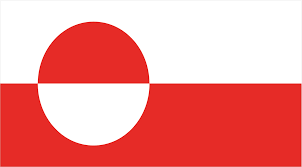
Finally, there is a rather depressing connotation to the phrase “they wouldn’t easily let themselves become Greenlanders”. Greenland, more properly known as Kalallit Nunaat, has by far the highest rate of people killing themselves in the world at eighty-three in a hundred thousand per annum. The next highest is Lesotho at seventy-two, followed by Guyana at 40.3 and Eswatini at 29.4. It’s the leading cause of death there among young men and eight percent of the population die by their own hands. Several factors are likely to be involved, such as insomnia caused by twenty-four hour daylight and perhaps also twenty-four hour darkness, and depression and alcoholism are also more common in the Arctic generally. However, a major contributory cause is likely to be culture shock between Inuit and Danish lifestyle. When you consider that the end of a lifestyle involving close-knit relationships and isolation from Western influence is likely to lead to a lot of stress, dysfunctional home environments and something resembling unemployment, it’s hardly surprising that these polysynthetic language speakers wouldn’t easily let themselves become Greenlanders. Maybe they shouldn’t have to.

Denisovans

Most people have heard of Neanderthals. In fact, most White, Asian and Native American people carry Neanderthal DNA, up to about four percent. Afrikans tend to have less but it’s recently been found that they have more than was once thought, which makes sense because people do regularly migrate between Afrika and Eurasia. I understand that East Asians have the highest proportion. Neanderthal DNA influences reactions to Covid-19, height, immune system function, hair and skin tone, depression and addiction in people today. The Neanderthals were rediscovered formally by the scientific establishment quite some time ago, in the Neander valley in 1856 CE. Clearly they can only have been rediscovered because we contain their DNA, so there must have been interbreeding and this means Hom. sap. must’ve known about them and they about us, although it will probably never be clear how we perceived each other.

Very recent discoveries, or again rediscoveries, have revealed that there were a few other species, or perhaps subspecies, of human with whom we shared Eurasia in particular, as well as the Neanderthals. The discovery of “hobbits” who died out fifty millennia ago in today’s eastern Indonesia was one celebrated example. These were dwarf humans, about 110 centimetres tall with small heads, who may or may not represent a different species. It’s been suggested that these were the results of the inbreeding of a small population or possibly iodine deficiency, but if that’s so, it doesn’t mean they didn’t adapt successfully to those conditions. Axolotls for example were initially the tadpoles of salamanders who couldn’t mature due to the lack of iodine in their water but are now a species in their own right who reproduce successfully. Homo floresiensis is, however, not what I want to talk about today.

Only eleven years ago, a woman’s little finger bone was discovered in a cave in the Altai Mountains in central and eastern Asia. This cave was known to have been frequented often by Neanderthals but this bone turned out to be different. It contained DNA from a hitherto un-rediscovered species of human, now called a Denisovan after the cave. The DNA showed that they had diverged from the Neanderthals six hundred millennia back and with the common ancestor of H. sapiens and those two species or subspecies eight hundred millennia ago. Thus far, only small parts of skeletons have been found, including a parietal bone (side of the cranium) which indicated that their brains had a capacity towards the upper end of the Neanderthal range, which is itself above that of surviving humans, at 1 800 ml. A third molar was also found which was larger than that of any Homo molar except for Homo habilis and H. rudolfensis, and similar in size proportionately to that of Australopithecines. A hybrid with Neanderthals has also been found.

One of the remarkable things about this is that even though palæoanthropology has been going since the mid-nineteenth Christian century, everyone has been operating in complete ignorance of an entire species of human closely related enough to us to contribute their DNA to ours. This is a major aspect of human prehistory. It turns out also that Melanesians have up to five percent Denisovan DNA and, more surprisingly considering their location, Icelanders had 3.3%. This last is thought to result from Neanderthal ancestry rather than directly from Denisovans. The most Denisovan population of modern humans is found among the Aeta people of the Philippines, who are considered to be a relict population from before the islands were settled by Tagalog and Cebuano speakers or their ancestors. This also seems to imply that there were two waves of settlement into Southeast Asia. Denisovans also crossed the Wallace Line between Australasian and Asian fauna and flora, which suggests that they used rafts to do so although of course other ways in which they ended up there may be involved. I have a pet hypothesis about this. Well, I say that – I’ve only just thought of it.

Denisovan remains have been found far above sea level in Tibet. Their genes include an allele which confers resistance to hypoxia. That is, they could cope well in low-oxygen conditions than most of our species. This would also be useful underwater, so I’m now wondering if this helped them cross the water towards Australasia. Other genes show that their eyes, skin and hair were all dark, by contrast with the apparently light-skinned, blue-eyed and possibly fair-headed Neanderthals. Attempts have been made to reconstruct their facial appearance based on the methylation of their DNA. This is where a methyl group (CH3) is linked to a base such as cytosine which makes it inactive. This happens in life and also in embryos to inhibit the further expression of a gene. It’s incidentally apparently the reason two ova can’t be merged to produce a zygote in humans. In a gamete, all the methylations of the parent are removed from its DNA, so it starts with a clean slate. It’s also involved in the formation of Barr Bodies from X chromosomes. Now this is my guess: I think that if you looked at the genes responsible for the development of the face, you would be able to work out what happened from their later methylation because clearly a face doesn’t continue to develop genetically after adulthood. It does in other ways of course: it succumbs to gravity, acquires wrinkles and the mandible may remodel if teeth are lost. The result is similar to a Neanderthal face.

Five percent of DNA is equivalent to about the proportion you’d expect from a single great-great-great grandparent, a distance from which family resemblance is clearly detectable. The specific genes inherited from Denisovans are to do with muscle and bone rather than the nervous system, which is Neanderthal-influenced in many of us.

One of the startling things about the Denisovan cave is that it has unexpectedly sophisticated artifacts for non-Homo sapiens sapiens humans, and in fact even for us at that time. There’s a forty-five thousand year old bracelet of polished bone which is as sophisticated as our own jewellery from thirty-five millennia later, and also a mammoth ivory button and bone beads. So once again I’m going to go off on one. These are people with bigger brains than us who had technology thirty-five thousand years ahead of our own. Is it going too far to speculate that they might have been more “intelligent” than us too? Brain size doesn’t do that alone of course. Neanderthals are thought to have larger brains because their bodies were bulkier, and Denisovans had an average weight of a hundred kilos. And of course, size isn’t everything.

The Denisovans were in the Tibetan cave, far above sea level, for a hundred and fifteen thousand years or more, dating from 160 000 BP on. Their tools in the Denisova cave show technological progress, becoming more sculpted and sophisticated over the millennia. Also, since they were constantly living at such a high altitude in Tibet, it’s probable that they evolved the low-oxygen gene while they were up there.

The size of their teeth is probably a throwback feature because neither Neanderthals nor we have molars that big. They may have helped them eat tougher food, which raises the question in my mind of whether they had fire. However, their ancestors had it so the chances are they would too. There’s also a question of range. Denisova Cave is 51° north and may represent the limit of their range in that direction. A number of unidentified hominin fossils have been found in China, which may also be theirs, and there’s an arm bone in Kyrgyzstan which is possibly also Denisovan, representing the westernmost find at 41° east of Greenwich. Hence the Denisovans seem to have been mainly central and east Asian and Australasian. One idea as to their origins is that an ice sheet in mid-Eurasia separated the populations which were to become Neanderthals and Denisovans, leading to two distinctive populations of humans, one Asian and one European. Within the Denisovans themselves there may be a genetic subdivision between continental and insular groups, so the Denisovan DNA inherited by the Melanesians may not be from the mainland group. The climatic conditions are of course very different in Indonesia and Tibet. It’s also arguable whether Neanderthals, Homo sapiens sapiens and the Denisovans are different species at all, as they clearly formed a breeding population. I’m personally wondering if the real situation was that we couldn’t interbreed at the extremes of our ranges but blended into a single species at the centre, so to speak, perhaps somewhere in the Middle East.

To finish, I want to step outside this and inject a note of doubt. Whereas I would like there to have been a significant extra species of human unknown until recently, this may well not be a species in its own right and there sometimes seem to be rather a lot of species in our genus. There seem to be about fourteen, of which all but one are extinct. This makes me wonder two things. Firstly, I think it may be a question of people wanting to treat humans as special rather than just another clade of animals. Secondly, I think it’s a good way of getting an impressive publishable unit to do this, and therefore this could be influenced by the “publish or die” mentality. I also wonder about whether being beleaguered by creationists leads palæoanthropologists, and in fact palæontologists in general, to be reactive in their work and insist rather too much on the identification of fossil species. There’s an adapiform called Darwinius masillæ discovered in the Messel deposits for example. Why name it after Darwin? It’s a primate. I dunno, just seems a bit like they’re trying to prove something to people who deny the reality of evolution. All that said, Denisovans are still fascinating and it’ll be interesting to observe what happens in the next few years.

Out Of Afrika x 4

In Northeastern Niger, now deep in the desert, there is a life-size rock carving of two giraffes, the largest piece of rock art in the world. Dating from Neolithic times, they and many other carvings strongly suggest that the Sahara region at the time was not a desert at all, but more like the Serengeti. There are many other carvings throughout the Sahara of bovids, including a genus called Pelorovis. Later rock art includes drawings of horses and chariots. All of this indicates that quite recently, perhaps into historical times, the Sahara was not a desert. This is the Sahara Pump Hypothesis, and is considered important to a number of aspects of human history.

The vast desert that now exists all across North Afrika would seem to present a considerable barrier to the exit of humans from the continent. Controversially, we may have evolved on an island in the Gulf of Aden, spread into the Horn of Afrika southward. The earliest known representatives of the genus Homo known date from Ethiopia 2.8 million years ago. Homo habilis is found in East and South Afrika from about 2.3 million years ago although they may not be directly ancestral to us. Homo erectus, on the other hand, is found not only in Afrika but also all the way across Eurasia, including “Java Man”, found in 1891, and “Peking Man”, in 1926. These people must have managed to get out of Afrika somehow. It’s been suggested that they did it by moving along the Nile Valley, but if the whole of North Afrika fluctuated between desert and more humid conditions, their movement is not so unusual. After all, if there used to be giraffes and other typical savannah fauna in the Sahara, why should that not include humans? Moreover, considering that there used to be hippos in the Thames, isn’t it likely that they would’ve got there because there wasn’t a desert in the way?

I feel quite strongly that White people tend to use the Sahara Desert as a way of marking off the more southerly portion of the continent as a kind of “Darkest Africa” (with a C of course) where all the Black people come from. Perhaps we like to imagine there’s always been a line in the sand, as it were, between us and the majority of human genetic diversity found south of it, a view which the Tuareg, for example, do not consider significant. I can’t speak for the Tuareg of course, but those who live in Mali compared to those who live in Libya are considerably darker-skinned but all of them consider themselves as part of the same ethnicity, because they are. However, this is not the main focus of my post today.

The Sahara Pump Hypothesis is generally known as the Sahara Pump Theory, and whereas it certainly rings true to me it is apparently not currently considered rigorous enough to be regarded as one. This raises the Kuhnian view of scientific change in my mind. Thomas Kuhn claimed that the social dynamics of academia were the most significant factor in the acceptance and rejection of theories, so that it was only when the younger people who came up with new theories reached positions of influence that their theories became accepted by the discipline concerned. There may also be other factors. I, for example, believe hominins had an amphibious phase, living in or near beaches, hence my belief that we may have evolved in the Gulf of Aden, which is Elaine Morgan’s belief, not widely accepted by palæontologists, possibly because its emphasis includes the evolution of women rather than focussing solely on men. Hence “Sahara Pump Hypothesis“, even though to an outsider it looks pretty convincing.

There are said to have been a number of phases. The earliest was in the Plio-Pleistocene, a concept used in palæoanthropology to demarcate a period between about five million to twelve thousand years ago which focusses on the evolution and ecology of large vertebrates and the cooling trend which marks this stretch of time, even though it doesn’t work well for more broadly-based palæontology. As far as hominins are concerned, however, there is no firm shift in our history with the onset of the Pleistocene more significant than other events in our story. There are two phases considered here. The first is around 3.2 million years ago, and the other a two hundred millennium period starting about half a million years later. Both of these are well before the start of the current cycle of ice ages and interglacials. One event that happened at this time was that goats spread from Afrika into Eurasia. Another primate than humans, the macaques, also increased their range around then. Geladas, on the other hand, found their range reduced.

Later on there were two waves of Homo erectus migration. The first got all the way to the Far East but the second only reached as far as South Asia. This can be determined by the kind of tools used at the time. There are also signs in the caves, where the likes of stalagmites and stalactites grew during certain periods and halted at others, because water wasn’t entering the systems. Later on, Homo heidelbergensis also managed to spread out of Afrika, and finally Homo sapiens, followed by three more events, one associated with the 8.2 kiloyear event which I’m planning to cover in more detail below, another with the 5.9 kiloyear event and the most recent with the Late Bronze Age Collapse and ensuing Dark Age.

Ice ages generally increase the sizes of hot deserts because a lot of water is locked up in the ice. Consequently, in general during the last few ice ages the Sahara has been both a desert and larger than it is now. The immediate cause of the shrinkage of the desert is increase in the strength of the monsoons in West Afrika, which leads to more water arriving from both the Mediterranean and the Atlantic off the western coast of the Sahara. This is driven by the gradual shifts in the orientation of this planet’s orbit such that we end up closest to the Sun in different seasons. Currently, the Northern summer is when we’re furthest from the Sun, but that very gradually shifts and when the perihelion is in the summer, this triggers more evaporation from the North Atlantic and higher rainfall. Another factor is that the doldrums, the belts of latitude where there is little wind, shift away from the Equator due to warmer temperate regions and this pushes the monsoon region north in the Northern Hemisphere. There are many other factors.

The sea bed off the West Afrikan coast is currently rich in dust from the Sahara and also preserves pollen. Samples at various depths below that sea bed show fluctuations in the levels of dust and pollen types. When there is less dust, there’s also less Ephedra pollen, which prefers drier conditions and more sedge and grass pollen, which need more rain, and this reverses when there’s more. There have in fact been two hundred and thirty periods over the past eight million years when the Sahara was more humid, although when you get to that time scale continental drift becomes significant and Afrika as a whole was in a different position. When there’s more vegetation in the Sahara, it holds on to more water and also reduces the amount of sunlight reflected compared to sand or bare rock, so there’s a feedback effect. In the Sahara during these periods, there were larger lakes and/or more wetlands. These lakes were also linked by a more extensive river network and the rivers which are still there would have carried more water, particularly the Nile and the Niger. The shorelines of these lakes, and in one case, Lake Tchad, a sea, can be plotted using the contours of the land, and are further supported by the presence of rock art only above these levels, piles of fish bones and also the prevalence of fish hooks. Lake Tchad, sometimes referred to today in that prehistoric state as Megalake Chad, had an estimated area of 340 000 square kilometres and a depth of up to a hundred and sixty metres, which is about the size of the Caspian Sea. Other “megalakes” included the Megafezzan, Ahnet and, just barely cut off from the Mediterranean, the Chotta. This last has an interesting history as there was once a French plan to reflood the area by digging a canal from the sea to the basin. The Romans undertook an expedition in search of spices to the Tchad, where they encountered hippopotami. Also in these lakes were turtles, Nile perch and crocodiles. The presence of the rivers would also have eased movement into and out of the area. Just outside Afrika was the famed “Arabia Felix”, the south of the Arabian peninsula which is now uncontroversially desert but back then was perceived by the Romans as a fertile and lush environment where many spices originated. Although this is in the realm of “travellers’ tales”, there certainly would’ve been a time when the Arabian peninsula was like this.

The words for “hippo” in widely separated North Afrikan languages tend to be similar. In Aiki, spoken in Tchad, the word is bùngùr, in Songhoyboro Ciine, spoken in Niger, it’s bàŋà, and in the Nara language of Eritrea it’s àbà. That doesn’t sound that close to me, but there is also a theory which seeks to explain the distribution of the Afro-Asiatic languages in terms of the Sahara Pump. The current spread of these languages looks like this:

By Noahedits – Own work, CC BY-SA 4.0, https://commons.wikimedia.org/w/index.php?curid=86724098

Hearing the word “Afro-Asiatic” may make them sound rather more obscure to Europeans than they in fact are. These are in fact what used to be called the Hamitic-Semitic-Kushitic language family, and includes the liturgical languages Ge`ez and Coptic as well as Hebrew, Arabic, Maltese and the Berber tongues, as well as Amharic, an important language of Ethiopia, the significant Hausa language of West Afrika, and Ancient Egyptian. There are 350 surviving Afro-Asiatic languages, spoken by a total of five hundred million people, Arabic being of course the most successful. Usually, when an attempt is made to reconstruct a parental language from a language family, such as Indo-European, it seems to date to some time in the Bronze Age. Not Afro-Asiatic though, I presume partly due to the fact that Ancient Egyptian is so, well, ancient, being over 5 500 years old. The other written language recorded at this time, Sumerian, and also the slightly more recent Elamite, are difficult or impossible to relate to any other known languages because they’re so ancient the chances are their relatives are all long-since extinct. By contrast, Proto-Afro-Asiatic may have been spoken between 18 000 and 12 000 years ago, which is pre-Neolithic, probably in Northeastern Afrika.

These languages occupy a special place in linguistics. Because of Biblical literalism and the importance of the Abrahamic faiths, Europeans used to believe that all languages were descended from Hebrew. After all, if you take Genesis literally, all of the speech quoted in it, including what Eve and Adam said, is in Hebrew, and if the Bible is literally true that implies that the first language was Hebrew. Also, the vast majority of modern scripts derives from Phœnician, even including the South and Southeast Asian ones, some exceptions being the Far Eastern, West Afrikan and Native American forms of writing, so these are the people who invented writing and their languages were some of the first to be written. Hebrew, Arabic, Coptic and Ge`ez are also liturgical, so are considered special within their faith communities.

The period during which Proto-Afro-Asiatic was spoken is pre-Holocene and during one of the more humid Saharan ages. There are a number of theories about where it originated, including one popular among Egyptologists that it was along the eastern coast of the Mediterranean. This of course places it outside of Afrika already, and therefore presumes that it spread into the continent. It’s associated with the idea that languages spread with agriculture. The idea that it originated in the Horn of Afrika is based on the greater diversity found there, since more diverse languages tend to be found near their origins. An English example is the wide range of English accents found in this country in a relatively small area compared to the relative uniformity of North America and Australasia. The other two theories, which could involve the Sahara Pump Hypothesis, are that it originated in North Afrika and that it started in the southern Sahara and northern Sahel. DNA evidence among speakers of these languages suggests either the Horn of Afrika followed by an early spread into Asia followed by a return to the original region from Arabia, or the Middle East, the problem there being that the DNA in question arose by mutation after the spread had already happened. Also, linguistic and genetic histories can be completely different. One of the subgroups, though, is very high in both Tchad and Semitic language speakers, over ninety percent in fact, suggesting that both have an intermediate origin, perhaps over a very wide area of North Afrika, also known as the Sahara!

Hence I prefer to think of the origin of the Afro-Asiatic languages to be somewhere in the Green Sahara in the late Palæolithic. Whereas I don’t want to set too much store in the idea that ancient mythologies are inerrantly reliable sources, the Tanakh puts the origin of the whole human race in the Garden of Eden in Western Asia. If this is related to the idea of an Afro-Asiatic homeland it could mean that the Levantine theory is the correct one. However, if it isn’t, it kind of means that the Garden of Eden might in fact be the Sahara in a more humid phase, and that the stories told in Genesis relate to this area. Is it possible that the perception that land would become more hostile to growing crops because of what Christians think of as the Fall is actually due to the increasing harshness of the climate in that region. However, the clemency of the climate probably shouldn’t be overstressed since it still wasn’t exactly like France or some other “perfect” location. Placing the original land in North Afrika would also mean there was a movement of the people similar to the Exodus, but at a much earlier date which had nothing to do with the Ancient Egyptians.

The Afro-Asiatic languages as a group are largely uncontroversial except for the Omotic languages, which may not be related but simply have borrowed a lot of features from nearby languages which were genuinely Afro-Asiatic. These are written in the Ge`ez script like Amharic, or sometimes Latin, and are found in Ethiopia. They’re agglutinative – they inflect by adding separate morphemes to the stem – and also tonal, like most Afrikan languages spoken south of the Sahara. They’re the least like the other members of the family, and share vocabulary related to honey but not to bovids (“unto a land flowing with milk and honey” – “אֶל-אֶרֶץ זָבַת חָלָב וּדְבָשׁ”), suggesting that any split which may have occurred preceded pastoralism. If they are related, they’re closest to Cushitic, which is of course the group spoken in Kush, as mentioned in the Tanakh.

Hebrew, Aramaic, Arabic and Maltese are all clearly closely related to each other, as anyone with a smattering of any of them can tell. Maltese is unusual as a Semitic language spoken in Europe today, and used to have a wider range as Siculo-Arabic, spoken in Sicily until the thirteenth Christian century. Uniquely for a Semitic language, it’s written using Latin script and has borrowed a lot of Italian vocabulary, but is still thoroughly Semitic in grammar. As well as being spoken all across the Maghreb and into the Middle East and being used as a liturgical and technical language over an even wider region, Arabic was, as I’m sure you know, spoken in Iberia and Arabic words have even made their way into French as a result. The importance of Arabic cannot be overestimated. Hebrew is of course the language of the Bible and Israel, and I’ve talked about it copiously elsewhere. Aramaic is still spoken as well, and is also used here and there in the Bible. It was the language of Jesus and its script was adopted all across Asia, even forming the basis of the cursive Mongolian script. It’s still spoken today and has an uninterrupted history of three millennia.

The Berber languages are spoken in the Sahara and have their own script, called Tamazight, which I learned a couple of years ago and used to write a long plan I mentioned which I didn’t want anyone else to read at the time. Berber language and culture has been adversely affected by Arab hegemony in the Maghreb because the countries involved pursued Arabisation on independence from France, not enabling the Berbers to have much influence. As can be seen from the map, whereas the Berber-speaking communities in the northeast of the continent are fairly scattered, they form a pretty continuous area over most of Mali, much of southern Algeria and some of Niger.

The Berber language Tawellemmet, the largest Tuareg language, is spoken in Mali, Niger and northern Nigeria, and overlaps in territory with the not very closely related Hausa. Hausa is important. It’s a Chadic language spoken by a total of 75 million people, often as a second language, and due to the rapid growth in the population of Nigeria this is likely to be a considerable underestimate. It’s used as an auxiliary language in the country. It’s spoken in northern Nigeria, southern Niger, Tchad, Ghana and Cameroun. Some of Hausa is tonal, some not, depending on the dialect. Nowadays Hausa is written in Latin script although it previously used Arabic, like many other Afrikan languages such as Kiswahili and even Afrikaans. It also has at least three other scripts. It has implosive as well as plosive consonants, pronounced with an influx of air rather than an egress from the lungs. There are a couple of dozen ways to pluralise nouns.

Related closely to Hausa are the other Chadic languages, spoken of course in Tchad but also Nigeria, the Central African Republic and Cameroun. There are about a gross of these, whose speakers are thought to be descended from the people who dwelt on the shores of Lake Tchad when it was a sea in the mid-Holocene seven thousand years ago. Although Hausa is by far the most widely spoken, another eight languages have at least 200 000 speakers, which is more than Gàidhlig by far. They’re all tonal and lack consonant clusters, and suffix agglutinatively. Ngas is the second most widely-spoken Chadic language, found on the Jos Plateau in Nigeria.

The southernmost Afro-Asiatic languages are the Kushitic ones spoken in the Rift Valley in Tanzania, including Iraqw which is currently expanding through absorbing nearby groups. Along this southern border of the family’s native area there are many Niger-Congo languages spoken too, which don’t mix with the Afro-Asiatic ones. For instance, in the Jos Plateau, there is a language completely surrounded by Ngas which is not under threat.

It would be a bit of an omission not to mention Ancient Egyptian. This is not entirely extinct because of being adopted by the Coptic church early in the Christian Era. By this point it was written in a modified Greek alphabet with a line over some letters for a certain vowel and the use of several demotic characters to represent sounds not in Greek. It must surely be the oldest surviving language in the world, being at least five and a half thousand years old. Very early on, it adopted signs standing for individual sounds in its hieroglyphics, although a wide range of different signs were used representing several consonants together, whole concepts, gender and status. The number of signs used actually increased as time went by and as technology changed the appearance of signs standing for tools also altered to make them more like the contemporary instruments. Although like most other Semitic languages Egyptian didn’t write vowels, some of them can be worked out from the fact that Coptic, using as it does the Greek alphabet, does. Hieroglyphics became hieratics when written on papyrus and were slightly more sketchy, and eventually the cursive demotic, which is basically a handwritten script like many others but retaining many of the conceptual features of hieroglyphics. Ancient Egyptian and Coptic have a lot in common with other Semitic and Afro-Asiatic languages.

Although you wouldn’t be able to tell from Coptic, Arabic or Hebrew, most Afro-Asiatic languages are tonal. Their scripts tend to relegate vowels to a secondary importance relative to consonants, which reflects the fact that they use a “root and pattern” system, where the consonants carry the basic meaning of the words and the vowels inflect it. This happens with English strong verbs and mutation plurals so it isn’t as foreign as might at first appear. They usually have two genders, feminine and masculine, which include human beings, and the genders of each noun tend to remain the same in most of the languages. They also usually distinguish gender in second person pronouns as well as third, though not in first. One of the mysterious things about them is that they share many grammatical features with today’s Celtic languages, which are completely unrelated, and nobody knows why.

I realise I’ve gone off on one regarding language here, but to finish I want to return to the basic thought that the Sahara is not always a desert. If human influence on the climate is sufficiently weak, at some time, probably about thirteen millennia from now, the Sahara will once again cease to be a desert for thousands of years, the megalakes and river network will return and vegetation will once again cover the region. During the Roman period, the focus and concept of Europe was in some ways subservient to the idea of a Mediterranean region which consisted of that sea and its hinterland. This also erodes the concept of Afrika as a separate set of regions, and removes the geographical barrier which White Europeans are so keen on as a way of separating the “Blacks” from the “Whites”. It’s a mere accident of time and geography that we happen to be living at this point where they are separate. Not only is it thought that darker-skinned people than currently inhabit the region lived all the way up to the Mediterranean, including Ancient Egypt to some extent, but the Western Hunter-Gatherer population was not fair-skinned and nor were Caucasians in general up until a few thousand years ago. The presence of hippos in the Thames and straight-tusked elephants in the Thames Valley brings home the point that Europe, Britain included, and Afrika are geographically continuous, and if they were connected back then, how much more connected are they in this age of globalism?