I often do bait and switch on here and I should honour the title to some extent, so here it is. There’s much to admire about David Bowie and the world lost a genius a few years ago. I’ve blogged about him before and whereas I can’t be bothered to fish those bits out I do remember tracing his reference to superhumans in ‘Oh You Pretty Things’ back via Arthur C Clarke’s ‘Childhood’s End’ to Olaf Stapledon’s writing, particularly ‘Odd John’. But that isn’t what I’m thinking of right now. I’ll never forget the first time I heard ‘Space Oddity’. It was an oddity to hear that accent on the radio. I don’t know why exactly, because there were lots of southern English rock stars at the time, but somehow it seemed really, I don’t know, ground breaking. Of course he was groundbreaking in other ways. My ex is a big Bowie fan, and has found him a gateway into sci-fi, a genre she previously despised, but as I said to her, and for some reason I think this applies to him in particular, you can’t take things too far from his lyrics without ruining them. For instance, in the album ‘Ziggy Stardust’ and his Mott The Hoople single ‘All The Young Dudes’, we seem to be expected to believe that there will be a mains supply for electric guitars, organs and amplifiers during the apocalypse. In fact, maybe there will be and that’s a mark of his visionary nature, but it bothers me. They should’ve been acoustic.
What I have in mind today though is ‘Life On Mars’. This has now famously been used as the basis for the excellent time travel police procedural series, which to me felt like Sam Tyler travelling back to a time when things were “normal”. Unsettlingly, that series itself is now almost twenty years old and the same gap separates us from Windows 3.1 as Sam Tyler from Gene Hunt. Well, sort of – no spoilers! My take on the track itself, though, is that it’s about someone despairing of how life is here on Earth and hoping there’s life on Mars instead because at least then there’d be something better out there. I’ve said before that my greatest fear is that there is no life elsewhere in the Universe, mysterious encounters in Sussex chalkpits notwithstanding. This is also why I’m so peed off with the scarcity of phosphorus. Anyway, this is in fact a major reason why I’m so focussed on the possibility of alien life. I may have just written a nine thousand word long rambling blog post about silicon-based life, but the subtext is the same as Bowie’s song’s. As Monty Python put it, “pray to God there’s intelligent life somewhere up in space, ‘cos there’s bugger all down here on Earth”. I don’t entirely agree with that by the way. I think many of us choose not to think complexly, which is one reason we’re in this mess.
Okay, have I done enough of that now? Enough relatable stuff? Seriously though, I’ll try not to go off on one.
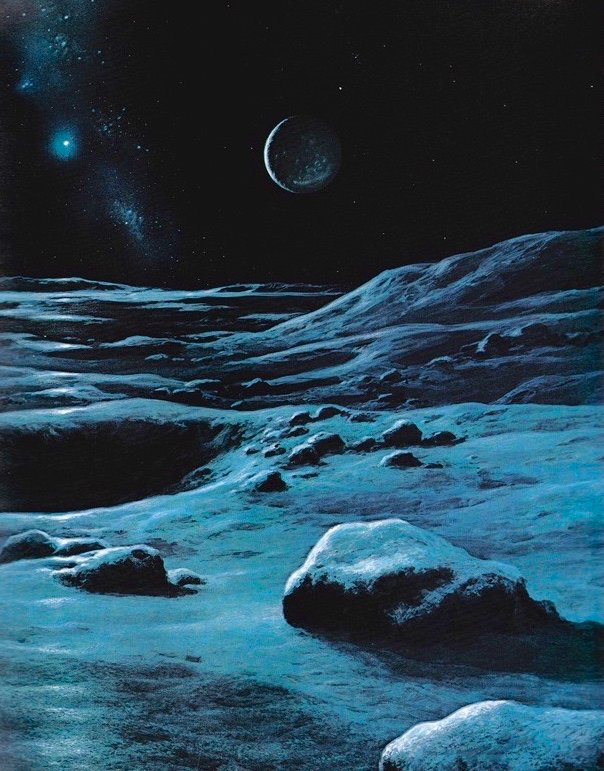
Because as you must know by now, it really looks like there might at some point have been life on Mars, according to recent discoveries there. I have to admit that at this point in the proceedings I have little idea what they’ve found, but I seem to remember it’s an iron compound which is found as a product of terrestrial life, possibly a sulphur one, which needs to have quite a lot of energy input to form but is then stable and has no known non-biochemical routes to its formation, that is, including the biochemical route involving the evolution of a technological species which can do sums like many of us, which I’m sure nobody sensible is suggesting. This is the latest stage in a long history of claims about Martians, and at some point it was considered so certain that there was intelligent life there that a competition for ways to communicate with aliens specifically excluded Mars because it was thought too easy. There have been claims of canals, lichens, and later on a scaled-down set of claims regarding something like bacteria. In particular there was the Labeled Release (American spelling) Experiment on the Viking lander which appeared to show positive results, i.e. the results which NASA had pre-decided would be best explained by life, but the problem was that the other two experiments were negative. It’s frustrated me until recently that they did this but right now it seems more like the way the scientific method works: come up with an idea, test it and then do everything you can possibly think of to prove a positive result wrong. On the other hand, looking at it non-scientifically at the time, it felt like they were in denial about the existence of life, possibly because it’s an audacious and potentially career-ending claim if it ends up being refuted, but also because it’s such an Earth-shattering claim. But this puzzles me a bit because in fact for a long time, since at least 1877 up until 1965, it was basically considered a dead cert that there was life there, and often also on Venus at the same time, and it didn’t seem to make much difference to the human race that we thought it was out there. Maybe this is to do with most people not being very focussed on space, but at least in the ’50s and ’60s this was definitely not so and in fact this was probably one source of inspiration for Bowie’s track. Getting back to Viking, it’s now thought that the results of the experiment were caused by perchlorate in the soil, a bleach-like substance which it’s also been claimed originated from the sterilisation process in the reaction chamber before the lander left Earth, although I think it’s now established that perchlorate is high in Martian soil. In fact I seem to remember (look at me failing to check my sources – sorry) that it makes Andy Weir’s ‘The Martian’ unfeasible, though maybe ingenuity would’ve got him out of his predicament some other way. Weir has since said that Watney could’ve washed it thoroughly first, so maybe, although wouldn’t he then have ended up with most of his water full of bleach? Maybe not. I’m not a chemist. There’s also been a view that the dendritic appearance of some terrain close to the poles is due to the action of microbes, something I went into in depth when I put the Martian calendar for 214 TE (telescopic era) together if anyone remembers that – it involved me throwing an inkjet printer into the larder with considerable force at one point.
What’s happened is that the Perseverence Rover in Jezero Crater has found what they call “leopard spots” on rock samples. Organic carbon-containing mudstones have been found to contain nodules and reaction fronts rich in ferrous iron phosphate and sulphide minerals. Vivianite is one possible candidate, which probably coincidentally is found in bivalve shells, and another is greigite, which is a ferrimagnetic mineral regarded as a biosignature, in other words a sign of life. Other processes which could have produced these minerals involve heating which doesn’t seem to have happened to the rocks in question as they would show other signs, for instance in their crystal structure. It seems that redox reactions have occurred there, that is, reactions involving the transfer of electrons between substances, one example of which is burning and another internal respiration. These rocks are around three thousand million years old, and at that time the same chemical reactions were occurring on Earth, mediated by microorganisms. So there are these two neighbouring planets on both of which chemical reactions usually associated with life are taking place. On Earth, it’s known that this is due to life, but what about Mars? The paper in question has eliminated other possibilities as likely explanations. Further investigation by NASA is of course not likely to occur due to funding cuts, but China might end up doing a sample return mission, that is, bringing samples back to Earth, in the next decade.
For me there are a couple of takeaways from this. One is that space exploration moves agonisingly slowly. This is probably an artifact of being born in the 1960s CE., but I was under the impression that there would be a human mission to the Red Planet from 1979 to 1981. This then got repeatedly postponed. The other is that science tends to do the same thing, although it’s also punctuated by revolutionary bursts of activity, according to the philosopher Thomas Kuhn anyway. It’s very cautious and tries hard to be boring. We seem to be edging very gradually into a position of accepting that there has been life elsewhere in the Universe, and that it was also found elsewhere in this solar system in a similar condition to its state on Earth at the time. Whether it exists on Mars now is another question, although of course “life finds a way”. Whereas that’s a bit of pop-culture tat, there is an element of truth in it and to be fair it’s quite a good line. You only have to look at a seedling growing between two paving stones to see that, but living on a practically airless, arid rock bathed in ultraviolet and dropping daily below the temperature of Antarctica is a considerably taller order than that. Maybe.
There are several possible worlds in this solar system other than Earth which may be hospitable to life as we know it. These include Venus, Mars, Ceres, Ganymede, Callisto, Europa, possibly Jupiter, Enceladus, Titan and maybe even Triton, Pluto and Charon. Several of these are quite a bit friendlier to it than Mars, although the question of it arising in those places in the first place also arises. Maybe it didn’t arise on those worlds though, and simply seeded them having arisen in space. If that’s so, maybe it’s the cloud that formed this solar system which gave rise to life, which then arrived on various planets, moons, asteroids, comets, wherever, and either died or, metaphorically, took root there. If that’s so, with reference to the previous post on here, it would probably show up as having the same chirality of molecules as we, i.e. left-handed proteins and right-handed carbs. It’s been suggested that life here must have pre-dated the Earth for two reasons: it seemed to arrive almost before it was possible for it to form, and looking at mutation rates in DNA takes it back to a point before the formation of this planet. To clarify, there’s a set mutation rate in DNA and RNA which enables scientists to date roughly when diverse organisms had a common ancestor, and incidentally this is usually before the first definite members of two groups turn up separately as fossils, which could mean a couple of things. The complexity of many genomes has increased over time as well, and this too can be measured from the genes which organisms still share. If you extrapolate these rates back to the point where the minimum information for an organism to function is present in the genome, you get a period of about nine or ten thousand million years ago, or roughly twice the age of the Earth. This isn’t generally regarded as solid evidence though. What it does suggest, interestingly, is that not only does life here descend from organisms present in the solar nebula, but actually it’s from a source which existed before this solar system had even begun to form.
I’m not going to base anything firmly on that possibility, but others have been suggested, one of which is that life arrived here from Mars aeons ago, which is supported by the likelihood that Mars was probably actually friendlier to life back then than Earth was. These redox reactions may be from the exact same taxon of organisms on both planets. And this is where it gets difficult.
David Bowie asked “is there life on Mars?”, but was this the right question? Many people have said that if life can be found there, or in or on any other world in this solar system, it guarantees that there’s life elsewhere in the Universe. Well, it really, really does not. Suppose we do find incontrovertible evidence that there is, just now, life on Mars, and also on several other worlds in this solar system, and moreover that it’s remarkably similar in some ways to life on Earth, for instance possibly sharing some genes with us, and has the same chiralities in proteins and carbs as us. That means that all of that life has a common ancestor. That common ancestor might have arisen in this solar system, or at least locally before this solar system formed. In terms of chirality, maybe there’s something about the processes of the Universe which lead right- and left-handed molecules of the respective types to form and persist while their mirror images don’t, or maybe there’s something about mirror life which means it won’t function, in which case all life of the kind we know in the Universe would have those chiralities for some very fundamental reason, but we’re still drawing conclusions from a very small sample. Maybe there’s either just something about this solar system which makes it more likely that life would emerge here, such as the relative abundance of phosphorus, or maybe it just did emerge here against all odds because we live in a very large Universe, many of whose planets are covered in a reddish-brown tarry goo instead of life.
For all we know, planets and moons here could be rich in life forms, and that would be a cheering thought, but that doesn’t of itself guarantee that the rest of the Cosmos is not utterly barren. For all we know, there could be endless lifeless worlds filling the Universe, which nothing whatsoever wrong with them but simply because the chances of it arising are vanishingly small. I’m sometimes haunted by the thought of some very, very Earth-like planet orbiting, I dunno, Delta Pavonis or whatever, with a perfectly comfortable surface temperature, oceans, continents, rain, thunderstorms, rainbows, mud, puddles children would love to splash in, sunsets over idyllic beaches lovers could walk along, or other phenomena alien beings could appreciate in their own way if they existed, but which will never, ever even see a single bacterium before their stars overheat and destroy them. Trillions of them, all without life. And this solar system being full of life would be of no significance, no consequence to that situation, because life just arose this one time. And this is why I say that if it could be proven that life existed nowhere in the Universe, I would stop worshipping God. It’s like a deal-breaker in a relationship for me. I would be terminally angry with such a Creator for sustaining in existence such a vast and uninhabited Cosmos. It would be really bad.
This, then, is why I say David Bowie is asking the wrong question. It’s the right one if understood in terms broader than just Mars, that is, if Mars is just a stand-in for another planet or other location where life could persist. Mars is just our next door neighbour, and we already know our bushes might end up growing over the fence or our aphids might end up infesting next door’s roses. Big deal. The Universe is so big that the size of this solar system is nothing to it.




 A Box Of Chocolates