When I was six, I set myself the task of memorising the then known moons of Saturn, and it stuck. Even today I can easily reel off “Janus, Mimas, Enceladus, Tethys, Dione, Rhea, Titan, Hyperion, Iapetus, Phoebe”. Several times that number of moons are known to orbit Saturn today, but even ten sounds like a lot. There are a couple of oddities on this list, but today I’m actually going to be talking about Janus. Sort of.
“Sort of” because Janus is not necessarily what we thought it was. It was sometimes, but at others it wasn’t. Janus was discovered in 1966 CE but although it had an unofficial name, it wasn’t officially called that until 1983. In the meantime, it had been discovered that “Janus” wasn’t what everyone thought it was. In the opposite situation to Venus, which had previously been called the morning and evening star (Phosphoros and Hesperos) and in ancient times was not recognised as the same thing, Janus turned out to be two separate moons. This led to confusion about the nature of its orbit, since it would appear to “jump around”. On arrival at Saturn, the Voyager probes were able to take a picture of two moons which seemed to be on a collision course with each other but were obviously still there in spite of previous apparent collisions, and it emerged that “Janus” was in fact two moons sharing the same orbit and swapping over when they got close to each other. Hence another name was needed, and one moon kept the name and the other was called Epimetheus. Epimetheus was in a sense the first Saturnian moon to be discovered by the Voyager missions and therefore has the number XI, but it had been seen before and just not recognised for what it was. Janus is considerably larger than Epimetheus, at three million cubic kilometres as opposed to 820 000, and since both are too small to be round it makes more sense to refer to their size by their volumes. Janus is in fact 203 by 185 by 152.6 kilometres, whereas Epimetheus is 129.8 by 114 by 106.2 kilometres. Neither are drastically far from being spherical and are, like a lot of other bodies of that size, potato-like in appearance, if potatoes have craters.
The situation with Janus and Epimetheus was the first time I realised that gravity doesn’t just attract. Janus and Epimetheus zoom around Saturn at around sixteen kilometres per second, kind of treating their common orbit like a race track. The inner moon catches up with the other, at which point they swing around each other and the inner becomes the outer. This works because the gravitational attraction between the moon in front and the one behind causes one to speed up and enter a higher orbit and the other to slow down and enter a lower one, after which they separate, i.e. move away from each other. In other words, the acceleration due to one moon “falling” towards the other leads to it being “pushed” away, so to speak. It would be interesting if some kind of jiggery-pokery from this happening could be harnessed to provide something which looks like anti-gravity, but it’s a very special case and I really don’t think it could be.
At their minimum distance, Janus and Epimetheus are only fifty kilometres apart. Since they are actually larger than that even in their minimum dimensions, each would practically fill the other’s sky at these times. Larger moons approaching at this sort of distance would smash each other to bits with their gravity, and it’s possible that this has already happened and caused the situation to arise in the first place. Maybe the two used to be a single dumb bell-shaped moon back in the day. The exchange occurs once every four years or so because at other times they aren’t close enough to have that influence on each other.
This is Janus itself:
Since the moon is only two hundred kilometres across, an individual pixel in this image would have a width of about two hundred metres. It isn’t minute, but it is fairly small. On the other hand, it’s also large enough to approach being round and doesn’t give the impression of being “cute” like some small moons and asteroids do because the features on its surface are not out of proportion. I only realised in the last couple of days that it was (kind of) discovered in 1966 because to me it’s always been there, which of course it sort of has, but it’s also a bit surprising that it was only discovered eight months before I was born, just after the Beach Boys’ ‘Good Vibrations’ had slipped off the number one spot (it was actually Tom Jones but I’ll breeze over that. He’s okay, but – well, you know).
There are four named features on Janus, named after characters from the legend of the twins Castor and Pollux, like other features on Epimetheus. These are Castor, Idas, Lynceus and Phoibe, all craters. There is a faint dust ring, about five thousand kilometres across, around the orbits, which isn’t surprising as they presumably claw at each other wildly every four years as they pass each other, which is bound to raise some dust, although it’s attributed to meteoroid impacts. They’re also shepherd moons, which isn’t just an album by Eithne but also refers to moons which keep rings in place and maintain their neat edges. Janus does a slightly better job than Epimetheus because it’s more massive, so the A Ring, which they shepherd, is neater when Janus is closer than when it’s the other way round. It’s also probably a rubble pile, hence the ring, and it’s quite icy. These two things together make it very light for its size, rather like Saturn, at sixty-three percent that of water, so it’s actually less dense than Saturn. It’s possible to measure this from the moons’ gravitational influence on each other. Surface gravity varies due to the irregular shape but is around a six hundredth of ours. It’s reddish-brown.
I might as well do Epimetheus while I’m at it. Epimetheus I would’ve expected to be paired with a moon called Prometheus as they were brothers, but apparently not. I also knew a cat called that so it’s a bit weird typing that name here. Here it is, seen from a pole:
It looks a lot more “moony” than Janus to me, because it has proper-looking craters. In fact I’m surprised how different they look. It was realised in about 1978 that astronomers were probably dealing with two different moons, and one of the Pioneer probes might have taken a picture of Epimetheus but it was too vague to enable it to have its orbit plotted. The craters are called Hilaeira and Pollux, which figures. There’s actually a photo of it with the shadow of the F Ring across it:
That’s it, more or less. Not a lot to say about such tiny moons. Oh, just that Janus used to be the god of doors and has a face on both sides of his head, which makes you think Janus the moon is special because it always has one face looking at Saturn and the other out into the rest of the system, but actually that’s normal for moons, in Saturn’s case all the way out to Titan.
(this is effectively a poster, if you want to download it, but it uses a lot of black ink).
Saturn and its moons are the second example of a mini-solar system within the big one. For thousands of years, Saturn was thought to be the outer limit of the Solar System, and has its own associations because of that, but for today I want to concentrate on the whole system of Saturn, with moons, rings and magnetosphere all included, rather than the planet itself.
Saturn has a prodigious number of moons, the count sometimes exceeding Jupiter’s. This is because of the Titius-Bode series. As you go further out, the orbits of the planets get more widely separated, meaning that a planet of the same mass has a longer gravitational reach over its surroundings. Saturn is of course considerably less massive than Jupiter, but its Hill Sphere, the region where its gravity is dominant, is bigger than Jupiter’s, at 1025 radii compared to Jupiter’s 687. Working this out in kilometres, Jupiter’s has a diameter of 96 million kilometres and Saturn’s is 119 million. Against this is the fact that the system is less cluttered out by Saturn than it is near Jupiter, with the asteroid belt being near the larger planet. Saturn has eighty-three moons not including the ones which form part of the rings, compared to Jupiter’s eighty. There was a point when Saturn’s moon count far exceeded Jupiter’s, but this seems to be over. The Hill Spheres are nowhere near each other and there is no competition between the two in this way. Unlike the magnetospheres.
When Voyager 2 was on its way to Saturn, it encountered Jupiter’s magnetotail in February 1981, which may indicate that the tail is forked. It did so again in May that year by which time it was nine-tenths of the way there, or around eighty million kilometres from Saturn. Saturn can even be within Jupiter’s magnetotail at times. As far as Saturn’s magnetosphere is concerned, all its moons out to Titan orbit entirely within it. Titan itself is very close to the edge and passes in and out of it, spending about a fifth of its time within. It’s surrounded by a doughnut of hydrogen extending inwards to Rhea, which is the second-largest moon. The bow shock is somewhat further out and extends north and south of the planet for at least thirty radii. Sunward it extends for almost two million kilometres. This means that of the large moons, only Iapetus and Phoebe orbit outside it entirely. As well as the neutral hydrogen torus around the orbit of Titan, there’s an inner torus of rarefied plasma of ionised hydrogen and oxygen, which effectively means protons and oxygen ions, whose outer diameter is about 400 000 kilometres. At the edge of this torus the temperature is over 400 million degrees C, but it should be born in mind that Earth’s thermosphere is 2 500°C and the Sun’s atmosphere is over a million Kelvin, which is hot but didn’t destroy the probe recently sent there. Temperature really represents the average kinetic energy of the particles and not heat. In a sauna, the air temperature can be over 100°C but the effect on the human body is nowhere near as harsh as boiling water for this reason.
Titan comprises 96% of the mass of all Saturn’s moons put together. This seems actually to be more typical than Jupiter with its four large moons, as similar mass distributions are found among the moons of Uranus and Neptune. The whole system has a kind of quietness and serenity to it, at least from afar. Some of the moons are active, but there’s nothing like the hot volcanism found on Io. All the moons are substantially icy. Saturn’s moons are unique in that some of them have trojans – moons which share their orbits but are sixty degrees behind or ahead of the larger moons. Saturn in general has quite a cluttered and ice-strewn neighbourhood in connection with its rings, and this seems to be part of this aspect of it. This means that the exact number of moons can never be determined because the size of bodies orbiting it goes all the way down, fairly evenly, to miscroscopic grains of ice and dust. In a way, all that can be said is that Titan is the biggest by far, being about the same size as Ganymede.
The five large inner moons, Mimas, Enceladus, Tethys, Dione and Rhea, all participate in the magnetosphere, absorbing protons, as do the particles making up the very sparse E ring. I’ll talk about the rings in detail when I get to Saturn itself, but another unique feature of Saturn’s system is the interaction between the particularly substantial rings and the magnetosphere. The other giant planets have much less substantial rings and therefore less significant interactions. Electrons are absorbed by the main rings, and below the main rings towards Saturn is the least radioactive region of the entire Solar System outside of large bodies and their atmospheres because the rings act as a radiation shield. There is, however, nothing as strong as the plasma tunnels and torus around Io, which influences radio transmissions from Jupiter.
Radio signals from Saturn are weaker than the ones from Jupiter in a broad range from twenty kilohertz to one megahertz, so listening to long or medium wave radio stations there would be right out. Like Jupiter’s System III, which is the common rotation of the interior of the planet with its magnetosphere, Saturn has its own System III, lasting ten hours, 34 minutes and two dozen seconds. There is nothing as strong as Io’s influence, but there is a relatively mild variation corresponding to the time taken for Dione to orbit, 2.7 days. This could be coincidence. When Saturn passes close to Jupiter’s magnetotail, the radio transmissions become undetectable but it isn’t clear whether they cease because of it or are just overwhelmed by Jovian radio noise.
The moons have fairly regularly spaced orbits out to Rhea, although there are some smaller moons which either share orbits with larger moons or regularly swap over. Titan, though, is over twice as far from Saturn as Rhea, then Hyperion is relatively close to Titan, Iapetus over twice as far from Saturn as Hyperion, and finally Phœbe is much further out and orbits backwards compared to the others and the majority of other worlds in the Solar System. This suggests that Phœbe is a captured asteroid. Surprisingly, although it was discovered in 1898, no moons further out were found until the twenty-first century despite the fact that the planet was visited several times by spacecraft. However, almost four dozen moons have now been found which orbit backwards. More than two dozen moons have yet to receive names because there are just so many of them. Even the most distant moon is well within Saturn’s Hill sphere, so it’s still possible that there are more. There’s also a cluster of moons, including shepherd moons and coörbitals, near the rings and possibly even within them, but it should be borne in mind that there’s a judgement call here regarding how big a ring particle is before it counts as a moon or moonlet.
Saturn, and therefore its system to some extent, is tilted 27° with respect to its orbit. This also tilts some of the moons but others are already at odd angles and it’s fairly meaningless to regard them as influenced by this tilt. For Dermott’s Law, mentioned in connection with the Galileans a couple of days ago, T=0.462 days and C=1.59.
I’m going to end on a personal note. I don’t remember Kepler’s third law of planetary motion very clearly, so I always use Saturn to work it out. Saturn is about ten AU from the Sun, i.e. ten times Earth’s distance. The cube of this is a thousand, and that’s square root is thirty. Saturn takes thirty years to orbit the Sun once, hence the Saturn Return of astrology, meaning that the cube of the semimajor axis (average distance from the Sun) of a planet is directly proportional to the square of its sidereal period (“year”).
Next time I’ll be looking at Saturn itself, including its rings, the famous hexagon and the unexpected connection with a certain comedian.
No, King John did not sign the Magna Carta here. Buddy Holly is not alive and well here. Christmas has never been celebrated here. Nor is this in Surrey. That’s Runnymede. Incidentally, Buddy Holly doesn’t live there either, although Christmas has definitely been celebrated in it. However, this is Ganymede, the largest moon in the Solar System and therefore the largest Galilean. It’s larger than Mercury and Pluto, but smaller than Mars. That said, it’s only 45% of Mercury’s mass.
To explain the rest, ‘1066 And All That’ claims that King John signed the Magna Carta on Ganymede. This opens up the possibility of a weirdly transposed version of English or British history where all the stuff that went on in our Middle Ages could be copied and used to tell the tale of a British version of the entire Solar System, perhaps with Jupiter as its capital. That makes me wonder where Scotland is. Ganymede also turns up in the rather startlingly entitled ‘Buddy Holly Is Alive And Well On Ganymede’, a novel which recounts the tale of one Oliver Vale, conceived at the moment of Buddy Holly’s death, who thirty years later finds that all the TV stations in the world have their signal hijacked by a broadcast of a rather bemused Buddy Holly on Ganymede who knows nothing of his situation except that there’s a TV camera pointing at him and a sign next to it reading
For assistance, contact Oliver Vale, 10146 Southwest 163rd Street, Topeka, Kansas, U.S.A.
It’s actually quite a good book.
As for Xmas, Isaac Asimov wrote a 1940 CE story called ‘Christmas On Ganymede’ about a mining company on said moon whose employees hear about Christmas and proceed to go on strike until visited by Santa in his flying sleigh pulled by reindeer. This version of Ganymede is much denser than the real one and has an almost-breathable atmosphere containing oxygen. I suspect Asimov already knew Ganymede wasn’t like that.
I’ve always called it “Ganymeed”, but it’s supposed to be pronounced “Ganymeedee”, which is how Buddy Holly says it in the book so it must be true, but I think both are acceptable pronunciations. Ganymede, or Ganymedes, himself, was a Trojan prince abducted by Zeus to serve as a cup-bearer to the Olympians. This means Ganymede was Zeus’s sexual partner in a pederastic setting, so the situation is mixed. On the one hand, we have a moon acknowledging homosexuality, but on the other current values place him as a victim in the same way as Io and Europa are of Zeus’s insatiable lust. He’s the basis of Aquarius, but the constellation Crater has nothing to do with either. I don’t know why Ganymede was the name given to the largest moon and I’m now wondering if Kepler or Marius, who named them in 1614, was secretly gay.
The next largest moon is Saturn’s Titan, which is also larger than Mercury. This makes it the ninth largest known object in the system. It’s the tenth largest by mass, again just ahead of Titan and giving it a larger surface area than Eurasia by quite a margin, and slightly larger than the Atlantic. It also contains an internal ocean with more water than exists on Earth. It takes four times as long to orbit Jupiter as Io does, and twice as long as Europa, so once again it’s in orbital harmony with other Galileans. It’s also the most massive moon, which puts it in a slightly odd position as its surface gravity is lower than Io’s or Europa’s, because it continues the trend of decreasing density with distance from Jupiter. It gets closest to Europa, at 400 000 kilometres, just over the distance between Earth and Cynthia. Callisto is somewhat apart from the others. Io and Europa taken together are less massive, but the imbalance between a single large moon and several or many smaller ones whose combined mass is less doesn’t apply in the Jovian system. In a way, Ganymede is the Jupiter of Jovian moons. It also, perhaps surprisingly, has the lowest escape velocity of all the Galileans, meaning that it won’t be able to hold onto anything like a proper atmosphere, or even the kind of atmosphere the inner two have. Like those though, it orbits within the radiation belts. Until the outer planets and moons were more thoroughly explored in the 1980s and more recently, it wasn’t clear out of the three moons of Ganymede, Titan and Triton which one was the biggest.
The moon was big enough for large Earth-bound telescopes to make out at least one of its surface features, Galileo Regio. The rather vaguely named regiones are Galileo, Marius, Perrine, Barnard and Nicholson, and are the dark patches. They also have sulci across them, of which there are over a dozen. Unlike the two inner Galileans, Ganymede’s surface has not been extensively reworked due to tidal forces and it therefore has a fair number of craters, though not as many as somewhere like Mercury. It’s the brightest of all the moons in our sky other than Cynthia, although it’s dimmer per unit area than Europa, because it’s also the largest. To some extent it resembles Cynthia, as the darker regiones are like the maria (seas) and there are also craters, but the broad sulci are not found on the lunar surface. Due to the surface being largely ice and at this temperature being softer than rock as we know it, it isn’t as craggy either, although it’s not as smooth as Europa. The gravity being lower might contribute to this. The maximum elevation is found among the sulci, which reach about seven hundred metres above the surface.
Galileo Regio is the size of Antarctica. It covers a third of the hemisphere facing away from Jupiter. Putting this into perspective, this means that as far as Earth is concerned, our continents and oceans would mainly be visible from Jupiter with a good telescope, although Australia might not be, and Jupiter is almost our neighbour in cosmic terms. All we’d be able to do from that distance is discern that the continents and oceans existed and were differently-coloured from each other. The most distinctive feature of the moon, and let’s once again affirm that by a more recent view than the 2006 IAU definition Ganymede is also a planet as much as Pluto is, is its grooved surface and the stripe-like features where they’re bundled together. These lighter sulci are newer than the dark regiones. It and Earth are the only known bodies which have lateral faulting, that is, where a fracture in the ground leads to the surfaces sliding along the fault rather than subsiding or rising. These sulci divide the terrain into polygonal blocks, the regiones, up to a thousand kilometres across. Although the moon is not currently active and drifting doesn’t occur, it has done in the past and this arrangement of plates separated by lateral fault zones is similar to Earth’s continental plates, making Ganymede the only other world in the system which has this kind of arrangement. Not even Venus, which is geologically quite like Earth in many ways, has this feature.
The crust is somewhat weak and can’t stand heavy weights upon it, and is underlaid by a much deeper layer of water. This leads to “drowned” looking craters which look quite similar to the ones on the lunar surface which became flooded with lava in æons past, but unlike them their origins are not associated with flows of liquid but mere collapse into the surface due to the weakness of the material. Most craters are on the regiones because they’re older. About half of the bulk of the planet (let’s call a spade a spade now we’re allowed to again) is ice and half is rock, although it isn’t clear how this is distributed. It does have a very large rocky core under the deep oceans, and also its own magnetic field, practically guaranteeing an iron-rich centre like Earth’s. Although one way of looking at the interior is as a frozen-over deep ocean of salt water over an ocean bed, it could equally well be described as a planet where ice and water replace our rocks and magma, with a mantle of water rather than molten rock. However, because the gravity is so low there, the pressure at the bottom of the ocean/mantle wouldn’t be excessive. As well as ice, there is clay mixed in with the crust, and there may also be ammonia ice. There’s also more dry ice at the poles, and as with several of the other moons the leading and trailing hemispheres of the planet have different surface compositions, probably because of Io again as the trailing side has more frozen sulphur dioxide. I have to admit that I don’t understand why these moons have deposits from Io on the trailing hemisphere rather than the leading one because it seems to me that they’d be entering a cloud of the stuff, which would then land on the “front” of the moon.
The crust is eight hundred kilometres deep and contains the kind of ice we’re familiar with here along with, as I’ve said, clay, but may also contain bubbles of the same kind of oxygen as we have in our atmosphere. Above it is, for the same reasons as on Europa, an extremely thin atmosphere of oxygen and ozone, and I’m guessing the ozone is formed by Jovian radiation in the same way as an electrical spark forms ozone here. This is a small fraction of a nanobar in pressure. Deep in the crust are large clusters of rock, which might either be piles at the bottom due to its inability to support their weight or embedded in the crust due to its ability to support it! There is then what may be a further hundred kilometres of water, ten times deeper than our Marianas Trench. This is salty, as can be seen by the way aurora behaves on the planet, influenced by the magnetic behaviour of the brine. The fact that there is so much water seems appropriate for a planet named after Zeus’s water-carrier. Ganymede is the only moon in the system with a magnetic field.
Beneath the ocean lies a layer which makes the existence of life as we know it unlikely. Although the lower gravity reduces the pressure, the ocean is so deep that it manages to compress the water back into ice, but of a different kind than we would come across here: tetragonal ice. There is more than one kind of tetragonal ice, and this one is referred to as “ice VI”. The ice we encounter close at hand on Earth’s surface is hexagonal, as can be seen for example in hexagonally-symmetrical snowflakes and the hexagonal columns which form in frost and elsewhere. Ganymede’s lower layer of ice is heavier than water and more akin to the normal behaviour of freezing materials than our ice, because it contracts on freezing. Its crystals consist of elongated cuboids composed each of ten water molecules. Depending on the pressure, its melting point can be as high as 82°C or as low as 0.16°C and it’s 31% denser than water. This kind of ice turns up in the interior of some icy moons. In Ganymede’s case it seems to rule out the existence of thermal vents which could provide energy for life, as it probably does elsewhere in the Universe in many ocean planets, because it forms a thick layer on top of the rocky surface below it which volcanism wouldn’t be able to penetrate.
The structure of the ocean may not be that simple though. The ocean may in fact be arranged in four layers separated by shells of ice of different kinds. Beneath the “ordinary” ice crust on the outside, there may be a relatively shallow ocean on top of a layer of ice III snow. Ice III has a similar crystal structure to ice IV, but because this is snow it would consist of non-hexagonal flakes, perhaps more like needles than hexagons or six-pointed stars. This could be floating on top of a second, deeper ocean, below which is a layer of ice V. This is tens to hundreds of kilometres deep and is monoclinic in structure – that is, two of its axes of symmetry are at 90° but the third is slanted. Examples of monoclinic minerals include gypsum (blackboard chalk), jade and some feldspars (which can be enormous crystals the size of buses found in caves). Then there’s a final layer of water followed by the aforementioned ice VI base.
Below the rocks is a liquid outer core consisting of a mixture of iron pyrites (fools’ gold – this is a sulphide of iron) and iron, and the final solid inner core is made of iron.
A few other bits and pieces. The radiation on the surface is sufficiently weak to be fatal to unprotected humans after a few weeks, but it still wouldn’t be a good idea to go there. There are ray craters like those we see on Cynthia, such as Tycho, which may have light or dark rays depending on where the impact occurred. The “drowned” craters are described as “palimpsests”, after the faint remnants of writing seen in old documents which have been over-written later. Nobody understands why there is a strong magnetic field.
For such a large moon I find it a little disappointing that Ganymede isn’t better known. It feels like there’s either a lack of information on the place or that it’s overshadowed by its more exciting neighbours. Io has the hyperactive volcanism, Europa the possibility of life. Ganymede has if anything a greater right to be thought of as a planet than any other moon in this solar system, being larger than Mercury, and might be expected to be either more interesting or a better-studied place but it definitely comes across as more placid. Also, for its size it’s surprisingly light. This lack of knowledge is likely to change in the next few years when the European Jupiter Icy Moons Explorer (JUICE) is launched to investigate Europa, Ganymede and Callisto, excluding the non-icy Io. This will ultimately orbit Ganymede for around two years before being crashed into its surface. There’s a lot of that, isn’t there?
We’re only here because of Jupiter. That statement is true for a couple of reasons, but it’s no exaggeration.
In spite of appearance and activity, I am of course a herbalist of twenty-three years standing, and you don’t get to be a herbalist without treating the liver. This is absolutely not homeedandherbs, which is effectively moribund, but Jupiter is our liver as a star system. The liver has many functions, but one important one is to detoxify and store toxins. Liver herbs are also associated with Jupiter in the melothesic system. Jupiter the planet performs a similar rôle in absorbing and “detoxifying” asteroids and comets which would otherwise pelt the inner planets, by attracting them to it and often literally absorbing them.
In July 1994 CE, Comet Shoemaker-Levy 9 impacted Jupiter, leaving temporary “bruises” like this one. Jupiter is in any case a big target, making it prima facie more than thirteen hundred times as likely to be hit by débris than Earth even leaving aside its greater gravity and larger Hill Sphere. Considering that, Jupiter becomes more than six thousand times as likely a target.
Jupiter is also responsible for Earth’s formation in the first place. Jupiter’s year lasts 11.86 times as long as ours. This means there’s a potential orbit just within ours whose objects orbit the Sun once every 361 days. This is so close to ours that Earth actually dips into it for a short time each December. Jupiter cleared that orbit of dust and rocks 4 600 million years ago, just marginally to one side because its orbit was exactly twelve times as long and almost every dozen years the protoplanets there were slightly tugged by its gravity. This led to a crowded ring of matter which was to become Earth. Hence in a second sense we are only here because of Jupiter. There isn’t anything special about Earth in that respect either, although the orbits of the other planets don’t work out as exactly. Uranus is close though – its year is close to seven times as long as Jupiter’s. I haven’t checked this out but presume that the ratios are something like 2 in 7 or something less obvious. Earth is the largest terrestrial planet though, and has the most straightforward ratio. It should also be borne in mind that Earth’s gravitational pull may have done the same thing and that the orbits of some of the planets may not be fixed. I haven’t worked all of this out yet.
I may have quoted this too many times, but the Solar System has been described as consisting of “the Sun, Jupiter and assorted débris”. This is a little misleading as Jupiter only has a mass of about a thousandth that of the Sun and all the rest of the matter in the system taken together has a mass of forty percent of Jupiter’s, which is not negligible. In terms of size, there’s a star, a planet about a tenth of the star’s diameter, and the rest. As mentioned yesterday, the Jovian moon system is like a mini-star system in itself and the magnetosphere reaches out almost to Saturn, making it bigger than the entire inner Solar System. From here, Jupiter is usually just slightly too small to make out its disc, but is easy to spot as a very bright star in the night sky, which can sometimes cast visible shadows. Venus is the only other body orbiting the Sun alone which can do that.
Jupiter gives the impression of turbulent and frantic behaviour, like a boiling pot of multicoloured paint. Olaf Stapledon compared it to streaky bacon, although that doesn’t do justice to the colours. Probably in the absence of the opportunity to find out much else about it, Jupiter’s stripes have been meticulously labelled, thus:
The general shape of the planet can be seen in this diagram: Jupiter is notably flattened at the poles and bulges at the edges. This is also true of Earth but in our case the planet is more or less rigid except for the atmosphere and ocean, so it’s only three permille wider at the Equator than at the poles, something I discussed in ‘For The High Jump‘. Jupiter, being largely fluid, is six percent wider at the equator, which is two-thirds the diameter of Earth itself. Saturn is even more squashed. It’s like someone sat on it. Geddit?
Being fluid, the planet doesn’t rotate as a single object but consists of System I, System II and System III, meaning it doesn’t have a single fixed day. In fact no planet has but that’s another story to do with fixed stars versus the Sun. System I is the equatorial rotation up to 9° latitude, System II the polar, actually everything further from the equator than that and is five minutes slower and System III the rotation of the extremely active radio signals from the planet. Additionally there’s the Great Equatorial Current, which is faster at nine hours, fifty minutes and 34.6 seconds, according to an estimate made in 1897. This is over twelve kilometres a second, compared to Earth’s equatorial velocity of 463 metres per second. This is the kind of frenetic and torrid environment Jupiter is. The whole planet takes a bit under ten hours to rotate. It also does so practically upright. There are no seasons. The Jovian year lasts 94 425 days according to the equatorial current rotation, but this is not a definitive figure because Jupiter doesn’t have one definitive day. This differential rotation also means there’s a lot of turbulence in the atmosphere between different latitudes, because they’re rotating at different velocities.
The problem of conveying longitude encountered with the Sun, that of attempting to find a fixed point on an essentially fluid surface, is also present here. No less than six systems exist for doing this. They’re significant because of comparing observations made by the various different space probes sent there since 1973. There is a second similar problem with Jupiter: where’s the surface? This and the other issue are characteristic of gas giants. The problem here is that you might say Earth’s surface is the bit we stand on, especially if we’re Jesus, but on Jupiter there just is nothing to stand on and although at some point there is liquid and solid in the interior, conditions there are so extreme that there’s about as much point considering it the surface as the core of the Sun. Most people go for the visible cloud tops, but sometimes you can see further down into the atmosphere than that.
The belts are dark, the zones light. Zone is actually the Greek word for “belt”. There are diverse variations within the belts and zones, but before I get there I should mention the elephant in the room, the Great Red Spot. This is a large oval 22° south of the equator, varying in width and drifts westward, which is a pity as if it didn’t it could be used as a marker for longitude. It also oscillates north and south by around 1 800 kilometres over a cycle of almost ninety days. First observed in 1664 by Robert Hooke, famous for his microscopy, the GRS may or may not be a persistent feature. It actually isn’t permanent. For instance, it disappeared completely in about 1980. It also fluctuates in size somewhat, but has recently been 16 350 kilometres east-west. Its nature and the reason for its colour are still unknown. The earliest idea was that it was a giant active volcano, which was at the time when Jupiter was thought to be largely a solid body. I don’t understand why they thought it was, though, because its density is easy to measure given the movements of the Galilean satellites and it clearly was not a massive lump of rock.
After the volcano theory was rejected, it was suggested that it was a large ovoid object floating in the atmosphere and bobbing up and down, because it appears to change in colour and size. Better resolution and lenses seem to have led to the realisation that it was some kind of anticyclone, being in the southern hemisphere, but this isn’t really an explanation because its persistence, size, location and colour are all puzzling. Two suggestions are that it’s a Taylor Column and a Soliton (‘Star Trek’ fans may have heard of that). A Taylor Column occurs when a rotating fluid meets an obstruction. Drag then forms a cylindrical structure. This would clearly require some kind of body floating in the atmosphere, or possibly in the liquid below it, and moreover an extremely large one considering the enormous strength of the Jovian gravitational field. A soliton is a wave packet which stays bunched together as it moves and is able to collide with other waves without losing its form. It’s hypothetically possible that solitons made of gravity waves (or possibly gravitational waves) could be used to achieve warp drives, but this isn’t relevant to the Great Red Spot, which is a fluid phenomenon, although I imagine that’s why it cropped up in ‘Star Trek’ (TNG – ‘New Ground’). It was first knowingly observed in a Scottish canal in 1834. They’re a bit like sonic booms. Solitons are generated in front of fast moving vessels in canals or rivers because of the horizontal and vertical restriction in the water. They’re like wakes moving ahead of an object instead of behind it because they have nowhere else to go. Once again, the idea of the flow being restricted is a little strange because it suggests the presence of solid obstructions, but maybe it’s more to do with the currents or turbulence being particularly markèd at those points.
There is another fascinating and mysterious aspect to the Great Red Spot which I don’t think has ever been explained. It occurs at the same latitude as several other phenomena on other planets. Olympus Mons on Mars seems to be caused by a hot spot in the planet’s mantle and is 20° north of the equator, and Hawaiʻi, caused by a similar hot spot, is also 20° north of the Equator, although in the latter case this is obscured by the movement of the Pacific Plate. Mars also seems to have drifted because the possible remnants of former moons which impacted its surface are no longer at its equator, which they should be given its current moons’ locations. Also, both of these phenomena are north of the equators rather than south of it. I’ve seen a diagram attempting to explain this by inscribing a tetrahedron one of whose vertices was at a pole, but I don’t know how relevant that is. Neptune has also had a dark spot 23° north of its equator but this may not be the Great Dark Spot as discovered by Voyager. It’s difficult to know if this is cherry-picking.
The other mystery about the GRS is its colour, which varies. Nobody knows what causes this. I find that somewhat surprising because I’d expect its spectrum to reveal its composition, but apparently it doesn’t. One suggestion is that it’s due to tholins generated by the action of solar ultraviolet light on acetylene and ammonium hydrosulphide. Another factor may be the greater altitude of the area. It is of course something like twice the size of Earth’s surface area. I don’t know if anyone has tried to correlate its changes with the activity of the Sun. It’s also colder than its surroundings, which is to be expected considering it’s higher up. It’s also extremely noisy, to the extent that as the sound from it travels up into the upper atmosphere it gets converted to heat and the region above the spot is 1 330°C. This may not be as spectacular as it sounds though, because temperature and heat are different. Low Earth Orbit, for example, technically has a very high temperature but it’s still freezing up there in the shadows.
There are other more transient spots, probably hurricanes, in the atmosphere, but weather systems in general are much longer-lasting in Jupiter’s atmosphere than ours because there’s no friction from a solid surface and also little variation due to the absence of land and liquid regions. Also, because the planet is so much bigger, so are the storms and other winds. Hurricanes often last decades. This raises the question of what weather would be like on a water world. If the figures relating to Jupiter’s axial tilt and surface are fed into a climate model for Earth, the result is a banded arrangement with persistent hurricanes, suggesting that conditions on such a planet, which might otherwise be habitable, could be quite hostile, and the weather conditions at particular latitudes would effectively constitute the climate because they’d be so stable.
Hydrogen and helium make up the bulk of the planet’s atmosphere, and therefore also the bulk of the planet itself, in similar proportions to the Universe in general and also the Sun. It managed to hang on to them because it’s colder on the outside and has such a high escape velocity. In 1939, the South Temperate Zone suffered a disturbance leading to the formation of a single white oval from four merging predecessors in 2000, which started to turn red in 2005. This time scale gives a good indication of how stable the weather is there. It’s also fascinating how Jupiter’s sheer size gives it a known history stretching back into Stuart times, which isn’t true of other planets except for Cynthia and Earth. Features on Mars were well-recognised but the occurrence of storms wasn’t observed until the nineteenth century, and Venus is just blank. This also underlines how dynamic the planet is compared to most others. The Jovian troposphere is somewhat like ours in terms of physical structure, with a falling temperature and pressure with height extending through clouds and leading up to a reversal and gradual increase of temperature marking the lower boundary of the stratosphere, then a mesosphere and thermosphere where the temperature is technically very high, but the chemical composition of the atmosphere is very different. It’s 90% hydrogen, 4.5% helium and has a significant amount of deuterium in it, though well under one percent. This compares to the one in six thousand atoms of hydrogen in Earth’s water. Deuterium also shows up in the compounds replacing the more abundant hydrogen. Methane, ammonia, water vapour, acetylene and phosphine are all present, as is carbon monoxide, but the really surprising constituent, though only present at less than one part per million, is the rather strangely named germane. Germane is like methane but has germanium instead of carbon in its molecules. Like many of the constituents of the Jovian atmosphere, germane would spontaneously ignite in our own. I don’t understand why there’s germane there. Germanium is not a particularly common element and its silicon analogue silane might be expected to be more widespread but it isn’t there. Germane is also denser than methane or silane, so its presence in detectable layers of the atmosphere is peculiar. I don’t think it’s found on any other planet. Incidentally, the presence of phosphine may not be a clue for life existing on Jupiter because the planet’s chemistry is not like that of Venus and conditions are very different. Here, it’s probably formed under high pressure much further down and churned up by convection currents. Methane is no surprise, and the carbon monoxide is probably the result of oxygen being relatively scarce in the original part of the solar nebula from which the planet formed.
You know that bit in ‘Fly Me To The Moon’? “Let me see what spring is like on Jupiter and Mars”? Well, whereas there are seasons on Mars, there are none on Jupiter, so it ain’t gonna happen. This is because Jupiter’s axial tilt is only 3°, so it basically has no seasons, although the butterfly effect might come into play. I suspect this is for two reasons. Firstly, Jupiter is the original planet in this system, so it probably determined the positions of the orbits, and secondly it’s so massive nothing could knock it off-kilter, so it ends up with a tiny tilt. In fact it’s surprising it tilts at all. If it did have seasons, each would last almost three years. Some people draw a link between the traditional Chinese cycle of twelve animals and the Western Zodiac because the planet spents around a year in each sign from our perspective. It should be pointed out that the strict 30° division of the ecliptic used in Western astrology doesn’t correspond to the actual portions of the zodiacal constellations in the ecliptic, and as is practically common knowledge nowadays, Ophiuchus is also in the circle and is ignored for astrological purposes. In the astronomical zodiac, Jupiter is currently in Aquarius but I don’t know how closely this corresponds to the astrological ephemeris, and it’s about to be the Year Of The Tiger. The orbit around the Sun is thrice more eccentric than ours at almost five percent, so there is a little variation in how much radiation and therefore heat Jupiter gets from the Sun.
However, Jupiter actually generates twice as much radiation as it receives, so there’s another reason it has no seasons: it’s actually warm itself, or in fact hot. This is because it’s still hot from the formation of the Solar System, since it has more than a thousand times the volume of Earth but only about 130 times our surface area, and possibly because it’s still contracting, although the contraction may be caused by the cooling rather than the other way round. At the core, the temperature is 20 000 K or higher, more than three times as hot as the Sun’s photosphere and almost as hot as solar flares, with an internal pressure of forty-five million times that of our atmosphere. There are two rival theories about the centre of the planet. One holds that there is no core in the sense of a solid rocky globe, but the planet just gets denser and denser towards the centre, and the other, more popular theory posits the existence of an Earth-sized rocky core. Somewhat away from the centre is a deep layer of liquid metallic hydrogen. Under very high pressures, various gases, such as oxygen and xenon, become metals. This may constitute up to 80% of Jupiter’s radius, and is responsible for generating the enormous magnetic field. The pressure here is a “mere” three million atmospheres and the temperature 11 000 K, so it’s still hotter than the Sun’s surface. Above this layer is molecular liquid hydrogen, twenty-five thousand kilometres below the clouds. The temperature finally drops below that of the Sun three thousand kilometres below the “surface”, where the pressure is ninety kilobars. A thousand kilometres down, the hydrogen becomes gaseous and the temperature is only around 2 000 K, then it falls to -143°C at the cloud tops. The magnetic field generated by the metallic hydrogen is about ten times the strength of Earth’s at this level, but it’s at an angle of almost 11° to the axis of rotation. All of this pressure stuff is exacerbated by the fact that Jupiter’s gravity is over two and a half times ours.
Jupiter has jet streams like Earth’s, but because of the coloured clouds, the white ones being mainly frozen ammonia, they’re more vividly colour-coded than ours. A jet stream is a relatively narrow, fast, horizontally undulating air current moving east to west and drifting north and south assuming the planet spins prograde. They’re formed by the Sun heating the atmosphere. There are four such streams on Earth, two subtropical and two polar. On Jupiter they’re driven by internal heating. Moving through the latitudes, there are alternating regions of faster and slower east-west winds, each of which is a jet stream, even though models show fewer jet streams on larger planets. Each stream is also “rolling”, in that it is a kind of horizontal whirlwind separated from its neighbours north and south.
Zones have more ammonia than belts, hence their paler appearance – they’re cloudier. The belt clouds are lower and thinner, and belts are warmer than zones. This makes sense if you think of ammonia condensing or freezing out of the atmosphere. I get the impression on looking at pictures of Jupiter that the belts look lower and possibly have shadows cast upon them by the clouds in the zones. Air seems to be warmed and rises in the zones, causing clouds to form as it expands and cools. In the belts, it sinks, becoming warmer and losing its clouds. The air flow generally tends to “stay in lane”. It doesn’t deviate in latitude much except within its belt or zone. At the poles, there are large circles in which not much seems to be happening. These caps can extend further towards the equator or less so, and the northernmost two bands after the north polar region can become incorporated into them temporarily. This extends to the NNTB (North North Temperate Belt), which can fade entirely, as it did in 1924. Consequently the NTZ varies in width. South of that, the NTB often has dark spots on its southern edge. The North Tropical Zone, NTrZ, is where the System I movement of the atmosphere comes uncoupled from the more polar System II. This leads me to ponder whether the planet consists of a series of nested hollow cylinders, such that the temperate regions north and south are in fact continuous but hidden under the more equatorial regions. They wouldn’t be homogenous in properties of course because the conditions deeper in the atmosphere are bound to be very different. Also, the liquid hydrogen ocean is not that far beneath the cloud tops.
The largest region on Jupiter is the EZ, or Equatorial Zone, with an area about an eighth that of the whole planet. That’s eight thousand million square kilometres, making it the largest visible feature in the entire Solar System. It’s something like six or seven times the entire surface area of all the inner planets taken together. While I’m at it, Earth mapped onto Jupiter would be the size of India on a map of Earth. There are many features in the EZ compared to most of the rest of the planet. For instance, it often shows plumes from its northern edge projecting southwest. A narrow belt appears occasionally at the equator itself. The southern side includes a “dent” where the Great Red Spot begins. The GRS itself is a feature dominating the South Tropical Zone, and this raises the question of why it’s in the southern hemisphere without any corresponding feature in the north. then again, the bands are not symmetrical either side of the equator either. The only thing I can think of right now is the very slight tilt of the planet combined with its greater orbital eccentricity creates slightly different conditions in the northern and southern hemispheres.
The planet emits decametric radio waves. This is of the order of thirty megahertz but they peak at seven to eight megahertz, so it’s close to the analogue VHF band used for FM radio on Earth, though the frequency is slightly lower. There are amateur radio projects monitoring Jupiter’s radio transmissions, which were discovered in 1955. Since they’re stronger in some parts of the planet than others, they provide fixed points enabling longitude and a “true” rotation period to be determined, but they aren’t associated with any visible features. They’re also polarised, like visible light passing through the plastic in front of a flatscreen monitor – they vibrate only at a fixed angle. This is due to Jupiter’s magnetic field and the charged particles moving within it. One of the moons, Io, influences the radio transmissions but I’ll talk about that more when I get to it. The decametric transmissions occur in short bursts sporadically. They last between a few minutes and several hours.
There are also decimetric waves, and these are continual and don’t have peaks at particular frequencies within that wave band, which is in the UHF range now used by mobile phones and previously by analogue PAL TV. They’re differently polarised and emitted from the volume around Jupiter. They’re synchrotron radiation, caused by charged particles moving in curves somewhat like the centrifugal effect, and show there are electrons moving almost at the speed of light. From Earth’s perspective this radiation fluctuates up and down according to whether we’re facing the planet’s magnetic equator or not.
This image is a painting made for Carl Sagan’s 1980 TV series ‘Cosmos’ and will be removed on request. As well as providing a fairly accurate image of what the planet looks like at cloud top level, it also illustrates Sagan’s speculations regarding life there. Although I am restraining myself from commenting on life elsewhere in the Solar System, the image without the organisms is still interesting. There are diffuse crystals of ammonia in the blue sky creating a halo around the rather smaller-looking Sun. A vortex can be seen towering over the scene to the left, with a bank of white clouds to the right, and there are a number of smaller vortices visible. Then there are long, almost straight clouds winding off into the distance, and of course on Jupiter the horizon would be several times further away than on Earth at around fifteen kilometres, although the clouds make it difficult to judge. Sagan proposed three ecological niches of organisms. There are “sinkers”, aerial phytoplankton which survive by photosynthesis and gradually sink into the depths of the planet, reproducing as they go until conditions kill them, “floaters”, somewhat jellyfish-like and balloon-like floating herbivores several kilometres across who can be seen in this image, and “hunters”, one of which can be seen at bottom right, who have a kind of retro, 1930s quality to them but look a little like Art Deco biplanes with round heads and sharp projections at the front. Asimov and Arthur C Clarke both believed that Jupiter was actually even more suitable for life than Earth, although the former’s belief was based on an earlier model of the planet which posited a vast, deep ocean beneath the clouds.
Right, so that’s Jupiter. I’ll probably do Io next.
This image makes me sad. Not only have I had to shoehorn it in under a flimsy “fair use” justification but in today’s long-since won victory of raster scan over vector, it doesn’t deserve this low resolution. I shall digress immediately from the main topic!
Here’s the thing, unappreciated by the youth of today. There was a time when there were two main ways of producing a graphical display on a cathode ray tube. There was, incidentally, a third way, which was actually the first historically, where character stencil anodes provided alphanumerics which were then placed on the screen using electrical fields to deflect the beam to the appropriate location, but this seems to have gone out of fashion in the 1960s CE. This is an extension of this experiment, dating from the nineteenth century:
It may not be exactly fair to describe it as a war, but the alternatives were to transmit signals to a relentlessly horizontally scanning electron beam alternately producing odd and even numbered lines or to steer the beam using X- and Y-axis electric plates to draw images on the screen like an Etch-A-Sketch. The latter system required a high-persistence phosphor – the glow from the substance coating the screen had to fade more slowly than it would’ve done on a telly or the images wouldn’t stick around long enough to be visible. These are raster and vector scan respectively. Vector scan has two advantages. It doesn’t need fast processing power or a lot of memory to store the image, and it has effectively infinite resolution. There’s no such thing as a pixel in the vector scan universe. Raster scan usually needs constant feeding by an overworked CPU or CRTC (cathode ray tube controller), usually with a frame buffer storing the image. The only exception I know to this approach was the Atari 2600, which had the 6507 CPU directly control the electron beam frame by frame, which makes me tired just thinking about it but was a necessity for a machine with only 128 bytes of RAM.
Anyway, in 1979 Atari brought out an arcade game with a different approach from the likes of ‘Space Invaders’ because it used vector scan. Every object on the screen was redrawn something like sixty times a second, including the player’s ship, the flying saucer, the missiles, the asteroids themselves and even the broken up rocks from the zapped former asteroids. I can’t help feeling there may be a link between the unusual techniques which must’ve been used to get their home console to do anything at all and Atari’s use of a vector scan monitor for ‘Asteroids’. Just imagine, though, trying to make a word processor that way, drawing something like two thousand alphanumeric characters on the screen every twenty milliseconds. Just ain’t gonna happen, particularly if all you’ve got is a Z80. It’s still a shame though.
I presume there’s a link between the asteroid field scene in ‘The Empire Strikes Back’ and this arcade game. They would’ve been developed at practically the same time, and both portray asteroids as fairly slow-moving but still deadly giant irregular rocks which hang around in crowded groups. In reality, asteroids are nothing like this. There was some concern when the first spacecraft were sent through the asteroid belt to Jupiter and Saturn that they were going to get clobbered by the rocks, but in fact that was a pretty remote risk. The belt contains up to two million asteroids at least a cubic kilometre in size, but the belt itself is enormous in extent. If considered to stretch all the way between the orbits of Mars and Jupiter, that’s five hundred and thirty million kilometres. It’s often inappropriate to consider space two-dimensionally, but this doesn’t apply so much to the asteroid belt as most of them orbit within a flattened region like the rest of the planets in the system. This gives it an area of 76 AU2, or 1.71 x 10¹⁸ square kilometres. Scatter two million planetoids on a plane that size and each will have on average 8.55 x 10¹¹ square kilometres to itself. This means that every asteroid can be expected to be almost a million kilometres from its next-door neighbour most of the time. The brightest asteroid is Vesta, with a magnitude from here of 5.1 at a distance of just over one astronomical unit, but this is far brighter than the majority. I haven’t done the maths but it seems reasonable to suppose from this that on the whole some asteroids would be visible to the naked eye from each other most of the time, mainly in the ecliptic (the plane of the solar system (actually Earth’s orbit but the two are close to each other)). But seeing a rock one kilometre across from a million kilometres away means they’d be unlikely to show a visible disc even through an ordinary telescope, and many asteroids are quite dark anyway. Hence most of the depiction of asteroids as occupying a hazard-strewn field with enormous irregular boulders within spitting distance of each other is confined to the realm of fiction, but there is one aspect of this image which is realistic. Asteroids are often piles of loosely-bound rubble which easily but often temporarily come apart with relatively little force.
The asteroid belt may not be neat in itself, but it does neatly divide the inner and the outer planets. Two very different ways of looking at the Solar System are that it consists of the Sun, Jupiter and assorted débris, and that it consists of the Sun, a belt of millions of rocks and a few planets and moons. This post will consider it in the latter manner. Almost every body in the system is an asteroid orbiting between Mars and Jupiter. Then there’s a smaller class of asteroids orbiting elsewhere but even these taken alone dwarf the number of moons and planets. There are also centaurs, but I’ll come to those in another post.
Are asteroids boring? Well, they’re generally small clumps of solid matter which don’t do very much most of the time. They don’t have the grandeur of the major planets and they aren’t beautiful, bright or colourful to most human eyes. A lot of them look rather like cratered potatoes. The first of them, Ceres, was discovered on the first day of the nineteenth century by Giuseppe Piazzi. It appeared to obey Bode’s Law, so he looked in the right place for it. Up until that time there had been a suspicious gap between Mars and Jupiter which “ought” to have had a planet in it. However, soon after its discovery it emerged that it was only one of many, thousands and nowadays millions of other bodies, referred to as minor planets. This is worth remarking upon because before the concept of the dwarf planet was invented, bodies orbiting the Sun were divided into comets and major and minor planets, so the category already existed and was in widespread use and it’s a bit strange that they decided to change that. Pluto could just be reclassified as a minor planet and be done with it.
Piazzi was working alone. He was not part of a group of five sponsored astronomers called the “celestial police” who were looking for the missing planet at the same time. The next three, Pallas, Juno and Vesta, were all found by 1807. Of these, Vesta is bright enough to be visible to the naked human eye on occasion. There was then a long gap before the next, Astræa, was found in 1845, by which time all the original discoverers had died. All the early asteroids have feminine names, and many were taken from mythology, but there ended up being so many of them that all the names were used up. Some of them are also doubled-up from other bodies, such as Ganymede. Many of the names are quite peculiar, such as Ekard, which was discovered by someone at Drake University, Hapag, named after a steamship company, and The NORC, which was a custom-built computer used to calculate the orbits of minor planets. Nowadays they’re often named after famous people such as Patrick Moore and Terry Pratchett.
Early on, it was conjectured that the asteroid belt was a remnant of a planet which had been broken up by a collision, named Phæthon, with which another planet sometimes called Marduk had an encounter. I was very taken by this as a child, to the extent that I imagined it was habitable but cold and settled by Homo erectus – you might remember I had an elaborate theory that humans had had a Galaxy-spanning civilisation hundreds of millennia ago. However, there is nowhere near enough mass in the belt for this to work. The total mass there is less than that of Pluto, and most of it is taken up by Ceres. What probably happened is that the asteroid belt is a relic of the early Solar System. The whole of the inner part of the system was probably initially a much more crowded disc of asteroids. Whereas in some places it was possible for the asteroids to coalesce into planets, helped by Jupiter’s gravitational shepherding, right next to the planet it was too disruptive for any other planets to form. The fact that the asteroids are much smaller than planets also means they’re likely to be a more accessible source of metals, particularly heavy metals, which tend to sink to the centre of larger bodies. This makes the asteroid belt potentially very useful. It’s almost literally a gold mine. I mention this not to emphasise the potential money which could be made, but to stress the utility of a potential resource which could be beyond the reach of capitalism. There is also the issue of whether we have the right to interfere with them at all. Maybe instead we should pursue technology which doesn’t require the use of these elements.
The belt is not entirely immune to the gravitational influence of Jupiter. Like the rest of the system, asteroids whose orbital periods are in harmony with the giant planet, such as 2/7 or 5/9, have been steadily pulled towards it at closest approach, forming what might be described as bands or clumps of rocks. The biggest of these is the Hecuba group, the penultimate one counting outward, which has a mean period of around six and a half years. The groups are named after their most prominent members and are, in order from innermost to outermost, Flora, Hestia, Minerva, Hecuba and Hilda. It’s misleading, though, to think of them as bands as such, because asteroidal orbits generally are quite elliptical and it’s entirely feasible for an asteroid belonging to one group to be in the territory of a completely different one. The mean distance from the Sun determines the period but the eccentricity and inclination can be almost anything, so whereas these groups exist, they don’t necessarily correspond to clumps which would show up if a chart of the instantaneous position of bodies in the belt at any one time were to be plotted.
It isn’t all about orbits of course, but it’s worth mentioning one final orbital peculiarity which occurs in the belt: that of Hidalgo. Like Icarus, Hidalgo’s orbit is more like that of a comet than a planet. It’s very tilted compared to planetary orbits at 42° and swings from the inner belt out to near the orbit of Saturn in a fourteen-year cycle. It has a diameter of fifty-two kilometres, and seems to be a centaur rather than an asteroid, although it “lives” in the belt for much of the time. It was discovered in 1920, which would make it the first centaur to be found, sixty years or so before Chiron.
Asteroids, particularly the smaller ones, are often not solid objects but clusters of rocks and dust held together loosely by their rather low gravity. They can sometimes be solid, such as if they’re larger as with Ceres or melted together due to close approaches to the Sun. This fragile condition has a number of consequences. It means that simply bombing a Near-Earth Object may lead to it temporarily distintegrating and then reassembling, besides the problem of a large number of smaller objects pelting the planet rather than one large one. More benignly, it means that many asteroids have their own moons, are practically double or can be dumbell-shaped, i.e. effectively two asteroids in contact with each other. Some are also ringed.
Composition-wise, there are different classes of asteroid. Some meteorites are former parts of asteroids, so in this case we have samples available right here. They can be metallic, carbonaceous, stony or icy, or mixtures of these. The most common class consists of clay and silicate minerals, making them closest to what we might think of as rocks. These are known as the C-type, for “chondrite”. S-types are stony, made of a mixture of nickel-iron and silicates. Finally, the metallic, or M-types, are mainly nickel-iron, like Earth’s core. Composition is partly dependent on distance from the Sun because of temperatures. The larger asteroids will have layers of different composition like a planet, whereas the smaller ones will be more mixed. There are also “vestoids” or V-types which are like Vesta. Vesta is somewhat unusual among the minor planets and only about six percent of the belt consists of these bodies. They’re unusually bright for their size. Some of them have orbits which suggest they’re physically associated with Vesta in some way, but not all. Diogenite meteorites are V-type, and are more like the kind of rocks found on Earth. Note that there’s a difference between “what we might think of as rocks” and the rocks we’re actually familiar with. Diogenites have undergone melting and cooling before entering our atmosphere and are also known as HED meteorites, for “howardite-eucrite-diogenite” after their main subtypes. When Vesta is hit by another body, chunks of its crust fly into space. If these reach the region of the belt where it takes about four years to orbit the Sun, which is two and a half AU from it and incidentally about the closest Ceres gets to the Sun. This is an unstable orbit due to Jupiter and over something like a hundred million years some of them become NEOs instead, and some of those actually reach Earth’s surface. In the meantime, some of them remain asteroids. Some are from deeper inside Vesta and rich in olivine, a mineral found on Cynthia.
It’s possible that rocks and the like bore most people. Eddie Izzard has a routine bemoaning how boring the exploration of the Solar System is because so much of it is basically about rocks. Since I’ve committed myself to avoiding the subject of life elsewhere, I’ve also kind of confined myself to such boring topics. A lot of planetary science is bound to be about rocks and minerals. Technically, many meteorites and therefore asteroids are not actually made of rocks at all, but for now I am, I’m afraid, going to talk about another kind of rock. I dunno, is this boring? I don’t think it is. Maybe it’s my job to excite you about these rocks.
Chondrites are stony and not modified by melting or differentiation, which is where different layers settle out, as happens on larger bodies. Something like six out of seven meteorites are chondrites, so it can be presumed that most belt asteroids are too. They formed when dust and grains of rock accreted in the early Solar System. They contain spherical objects called chondrules, which are solidified molten drops of rock. Perhaps surprisingly, some of them also contain minerals altered by water, but when you consider that water is the most abundant compound in the Universe this becomes less astonishing. There are also achondrites, which are basalt-like rocks with no chondrules. A fairly rare but significant type of chondrite is the carbonaceous variety, which contains organic compounds such as amino acids, as found in living things on this planet. Although chondrites generally are defined as low in metals, they may still have inclusions of metal within them.
Nickel-iron asteroids, also know as M-type, are presumed to exist as there are plenty of asteroids which have this kind of reflection spectrum. They include Psyche and Lutetia and can have a density as high as eight times that of water. The density of asteroids can be judged sometimes by how they influence spacecraft via their gravity or any moons they might have, or just concluded from their appearance. Psyche, with a diameter of 222 kilometres, is the largest M-type and is due to be visited by a space probe in 2026.
Around one asteroid in six is S-type: “stony”. The inner belt consists mainly of these and they become less common towards the orbit of Jupiter. Juno is an S-type, with a diameter of around two hundred and forty kilometres. They’re mainly silicates of magnesium and iron. Talc is a form of magnesium silicate, as are some forms of olivine, and iron silicate is the other extreme of olivine, which has various concentrations of magnesium and iron.
Many of Jupiter’s moons are in fact pilfered asteroids, as are the Martian Phobos and Deimos. In general, asteroids are more accessible to human inspection than most of the rest of the Solar System because many of them cross our orbit and fall on us in the form of meteorites, and space missions can also be sent to them fairly easily.
I’ve decided to leave Ceres and possibly some of the other larger asteroids in the belt until another post, because they’re large and atypical, more like planets than asteroids really. However, if Ceres is excluded, there are no asteroids both large enough and made of the right materials to be approximately round, exclusing them from the definition of planet.
I have committed myself to alternating posts on the Solar System with posts on anything but that. Today, I am strongly tempted to write something about recent discoveries in the neighbourhood of Tabby’s Star, but that would be somewhat similar to writing about the other topic, so I won’t be doing that today except to say, really, look it up because it’s absolutely amazing. You may have come across it already. Then there’s the millipede in Northumberland the size of a car. Also very interesting but quite sciency. I tell you, maybe I should’ve chosen that. But I didn’t, so instead I’m going to write about what the opposite to astronomy is, or rather I will after I’ve got something else out of my system: the idea of opposites.
When I was at primary school, we were doing opposites. We were asked what the opposite of black or white was, and unsurprisingly answered accordingly with whatever the other one was. This so far was controversial. We were then asked about the opposite to red, to which I replied that it was violet because it was at the other end of the visual spectrum. We were told that colours don’t have opposites. I disagreed with that then although nowadays my answer would probably be different. I would probably say that the opposite to red was aqua, because there are three additive primary colours, red, green and blue, and if red is 100, then aqua is 011. But this doesn’t always work because there are also subtractive primary colours, often described as red, yellow and blue, but possibly more like magenta, yellow and cyan (AKA “aqua”). If you go with the first, the answer will be green, and that also makes sense in terms of traffic lights, since red means “stop” and green means “go”. I think the opposite on a colour wheel would be the same but I’ll have to investigate. Hang on. Yes, it’s green apparently, although I will bow to the better judgement of whomso might be reading this, hint-hint.
I’ve been here before with my attempt to determine the essence of anti-custard. Here the issue is more complicated because custard has multitudinous qualities, but I provisionally decided that anti-custard was probably a blue breeze block. Bear with me on this one. Custard is of course a non-Newtonian fluid extremely suitable for speed bumps in many people’s opinions, but this kind of custard is rather far from being considered vanilla flavoured, yellow or edible. I happen to hate custard as a food item, so thinking of it as something to put in your mouth seems strange. Custard flows freely when treated gently but thickens up when hit hard, meaning that if you fill a swimming pool with it you ought to be able to walk on it. Hence the opposite of custard, in this sense, is a substance which flows freely when hit hard but resists gentle treatment, which is similar to most Newtonian fluids. However, very few real fluids as encountered in everyday life happen to be Newtonian. For instance, water resists the very gentlest treatment due to surface tension, which is stronger for it than most other liquids, then becomes more yielding as it’s treated more forcefully, so to some extent even water is non-Newtonian, and since most liquids we come across as humans on Earth are based on water, they’re likely to behave like that even if that’s unusual. Hence there are a number of axes along which custard can be placed, and it isn’t clear how to reverse them. There could be a reflection about the origin, the X axis, the Y axis, both X and Y axes and so forth. This discussion on the Halfbakery led to the invention of the delightful term “eigencustard”. The German word “eigen” is often translated as the adjective “own” but can also be translated as “proper” and this is probably more informative in this context. In maths, there are things called eigenvalues and eigenvectors, and here the word probably works best if understood as meaning “characteristic”. It’s probably most helpful to use diagrams to address what these are rather than formulæ, but I may have some difficulty doing this, so instead, consider this. Suppose you have a square made of latex (or lycra if you prefer – actually that might be more useful). If you then stretch that square vertically, the poisson ratio being positive (when it gets longer in one direction it gets shorter at right angles), the height will increase and the width decrease. This means that somewhere between the horizontal and the vertical is a direction in which the square does not stretch at all. This is an eigenvector of that square under that transformation. Similarly, in a fairground mirror one’s reflection may appear to be distorted but there may be some lines along which one looks exactly the same (this works better with two mirrors). These lines are eigenvectors. Now back to custard. If you imagine some kind of multidimensional space containing the essence of custard, doing something like flipping the custard through different angles and axes will result in substances with different eigenvalues and eigenvectors. Decide which are the most significant and you get anti-custard: the opposite of custard. However, there are a variety of eigencustards, which will not vary under these transformations.
This could be treated very seriously. The resistance of a fluid to flow under increasing force could be plotted on a line graph and turned upside down to produce whatever the opposite of that was. There are quite a number of markèdly non-Newtonian fluids around, such as tomato ketchup, quicksand, wet cement, silly putty, mayonnaise, the fluid inside automatic vehicle transmission, synovial fluid (in joints between bones) and non-drip gloss paint. It would be fairly straightforward to assert that in physical terms, tomato ketchup comes close to being the opposite of custard, but it’s also red. For it to be proper anti-custard, tomato ketchup must be blue, because blue is the opposite colour to yellow. However, it does seem to taste very different to custard, so it makes sense to consider the opposite to custard to be blue tomato ketchup. This is feasible.
What, then, of astronomy? One suggestion is that the opposite of astronomy is geology, and in a way this makes sense. If one considers the proper study of astronomy to be everything which is “up there”, geology can then be considered to be concerned with everything which is “down here”, or perhaps “down there”. The trouble is, this doesn’t really work. For an alien on another planet, astronomy would include geology in the sense that it’s the study of the physical material and processes affecting Earth. In another sense, geology is a speciality of planetology, and most people would say that planetology is a generalisation of geology as well as a speciality of astronomy. So it doesn’t work. In fact I find the idea that geology is in any way special quite distasteful as it seems narrow-minded, although of course Earth is very special because it’s kind of our mother – Tellus Mater. In that case it gets quite difficult to imagine what astronomy would exclude.
But then I think of the 1960s CE, and the idea of inner space in three different ways. If astronomy is the discovery of outer space, then the opposite of astronomy is the study of inner space. Inner space could be the interior of the atom, the interior of the body or the interior of the mind. All these have their merits. Atoms are very small as opposed to star systems and galaxies, which are very large. There are stories such as ‘The Girl In The Golden Atom’ which imagine that atoms are solar systems in their own right, and on a much larger scale it’s common to imagine that our own solar system is a mere atom in a macro-world around us. This doesn’t really work though, because of what really goes on inside atoms. If a solar system was like an atom, the Sun would consist of a ball of smaller stars, planets would move in strange orbits shaped like clover leaves in three dimensions and would not be located in definite places, and would emit other planets or have other planets crash into them as they teleported instantaneously across the system, and they would also tend to be bunched together. If, on the other hand, atoms were like solar systems the situation might be a bit more like matter as we know it, but solid matter would tend to break down and probably always be metallic, and there would be no such thing as valency and perhaps no such thing as chemistry. Nonetheless, as Demokritos once said,
νόμωι (γάρ φησι) γλυκὺ καὶ νόμωι πικρόν, νόμωι θερμόν, νόμωι ψυχρόν, νόμωι χροιή, ἐτεῆι δὲ ἄτομα καὶ κενόν – “By convention sweet is sweet, bitter is bitter, hot is hot, cold is cold, color is color; but in truth there are only atoms and the void”.
This doesn’t apply to atoms themselves nowadays but it does to a particular not very quantum view of the Universe: it’s mostly empty space with widely separated lumps in it. So is the opposite of astronomy nuclear physics then? I would say not for a major reason. Nuclear physics is a vitally important part of astrophysics in that it explains what stars and some other objects are and how they work, so once again there’s an issue with excluding a fairly central part of astronomy – from astronomy!
The makers of ‘Fantastic Voyage’ seem to have thought along the lines that the interior of the human body is like an alien planet or space, and to us it is our own inner space, so perhaps anatomy and physiology are the opposite of astronomy. I’m going to permit myself a diversion here into that work and its surroundings, as it used to be my favourite film when I was about nine.
First of all, ‘Fantastic Voyage’ is part of a whole complex of works. It has a little in common with ‘The Incredible Shrinking Man’ and ‘The Girl In The Golden Atom’ and a lot more in common with the later ‘The Men Inside’ and ‘Innerspace’, Doctor Who’s ‘The Invisible Enemy’ plus a whole load of parodies from such animations as ‘Rex The Runt’, ‘Family Guy’ and Radio 4’s ‘Old Harry’s Game’. Like Willy Wonka, it’s one of those films which has so captured the public imagination that sometimes it seems like every TV series out there has to pay homage to it. It also spawned an entire animated series of its own, rather like ‘Star Trek’ did. Isaac Asimov wrote the novelisation but didn’t associate himself closely with it. He agreed to write it because there were so many plot holes in the film that he considered it a challenge to address them. He also tried again with his own version of the story in the late 1980s, ‘Fantastic Voyage II: Destination Brain’. I gave this a go but got very bored with it as like many of Asimov’s stories it was all talk and little action. In the sequel, miniaturisation is achieved by reducing Planck’s Constant. The first novel, so far as I can remember, has a discussion of miniaturisation parallel to that made by Arthur C Clarke in his ‘Profiles Of The Future’, where the options are reducing the size of the orbitals in the atoms, removing some of the atoms or shrinking the size of all the particles involved. The problems are, respectively, that reducing the size of the orbitals leaves the object with the same mass, making it like a neutron star or black hole and causing it to fall to Earth’s core, which in a way would be a fantastic voyage but more Verne than Asimov, reducing the number of atoms simplifies the object, and if that object is human, its brain, resulting in a not very intelligent organism instead, and the third one is the Goldilocks solution – “just right”. Unfortunately the last answer is also the least plausible. A rewrite of this story today might have the people interact with nanobots from the safety of a VR facility, but that would take away all the peril. Maybe there would still be a way of manufacturing it, such as a harmful immune reaction triggered by the presence of the nanotech, which is quite similar to what happens in the film.
For a time, it’s said that the film was used in medical classes to teach certain aspects of medicine. I’m not sure this can be true, because it gets a number of things wrong. The blood corpuscles, for example, don’t look like real ones but seem to have been done with oil droplets in water, giving the impression of a lava lamp. It also suffers from higher definition versions, which for instance make the capillary epithelium look like printed curtains, which is presumably what they are. The phagocytes end up looking like white balloons, rather similar to the Rovers in ‘Prisoner’. This wasn’t so much a problem back in the day not only because of the lower quality of the prints (I’d only seen it on PAL TV, so I can’t vouch for the cinematic experience) but also because suspension of disbelief used to get more exercise back then. One of the notable things about the film is the fact that it was produced while New Wave SF was in its heyday, with its emphasis on mental rather than physical interior life. ‘Fantastic Voyage’ sends the crew into the brain where they’re able to view nerve impulses moving between brain cells and this provokes them to wonder about the soul. Hence they are actually inside a living human brain, but in a physical sense, while much of popular culture was exploring consciousness and therefore inner space through drugs and meditation, inter alia.
And then of course there’s New Wave SF and the exploration of consciousness, and therefore inner space in that sense, as seen in ‘The Ultimate Trip’ segment of ‘2001’ but also many other films of that era such as ‘Charly’ and remarkably ‘Willy Wonka’ with its tunnel scene. It seemed to be de rigeur to do that at the time, possibly to appeal to people on psychedelics. This is a different kind of inner space again, and seems to correspond to something like qualitative psychology, or maybe depth psychology. This is psychology, but not in the mainstream academic sense. It may seem arrogant to posit that the human mind is on an equal footing with the physical Universe, but the fact is that we cannot step out of our subjectivity.
To summarise then, these are the possible anti-astronomies: depth psychology, human biology, nuclear physics and geology. Alternatively, maybe it’s astrology.
Yesterday I “did” the Sun. The plan is to work out roughly from the Sun to the edge of the Solar System and cover everything interesting on the way. As mentioned “yesterday” (which probably isn’t yesterday from your perspective), the Sun has an atmosphere called the corona extending up to eight million kilometres from its photosphere. Few solid objects are able to maintain that distance from the Sun for a variety of reasons. Firstly, while very thin, the corona is still an atmosphere, and leaving everything else aside, anything orbiting entirely within that will experience the drag of the molecules and atoms there and fall into the Sun to be utterly destroyed unless it has the good fortune to be made of a very small number of precisely formulated compounds which would enable it to survive in the centre of a sunspot, and even then it would be temporary. There’s also the Roche Limit. If an object is less than 2.44 radii from another massive object, tidal forces will pull it apart because it will be like a large object almost sitting on the surface of a larger one. If Mars were sitting on Earth’s surface, it would fall apart and the remains would wrap around Earth while Earth did the same to Mars. The radius of the Sun from core to photosphere is 696 340 kilometres, so anything large less than a million kilometres or so above its surface would be ripped apart. Then there’s the temperature. Arthur C Clarke once worked out that hafnium carbide could hold up within a million and a half kilometres of the photosphere, and it’s now known that a carefully proportioned combination of hafnium, carbon and nitrogen could actually survive in a sunspot, but these are questions pertaining to artificial substances rather than minerals which could actually exist without technological intervention in this system. There are other substances which could arise spontaneously elsewhere in the Universe, for instance in carbon-rich planets such as do not exist here, which could hold up better, but they could presumably arrive in this system from such places. Carbon planets could include large amounts of titanium carbide and silicon carbide in their interiors, so there could be meteors composed of such substances very close to the Sun.
However, this is unlikely for a couple of reasons. One is that the combined pressure of sunlight and the solar wind (which I really should’ve mentioned “yesterday”) are likely to push objects close to the Sun away from it. There is also a process called the “YORP Effect”, for “Yarkovsky–O’Keefe–Radzievskii–Paddack” which places an inner limit on proximity. Sunlight is absorbed, reflected and heats asteroids, and since photons have their own momentum this alters the way asteroids rotate. These are tiny effects over a short period of time but will be larger the closer the asteroid is to the Sun. They would also have absolutely miniscule effects on other bodies, including Earth due to them having much greater mass. Over a longer period, these effects add up. Small asteroids are irregular and far from symmetrical, so the forces will differ on different parts of the object. This may be responsible for the formation of double asteroids and dumbell-shaped asteroids, which are quite common. Close to the Sun, bearing in mind that many asteroids are actually loosely-bound piles of rubble, this could completely rip them apart over a long period of time, as the rotation would differ in different parts of the body. Another effect is Poynting-Robertson drag, which particularly influences dust. One way this has been explained is via an effect called the aberration of starlight. Stars in our night sky seem to be in slightly different positions than their real ones because we are orbiting the Sun and it’s like walking through a rainstorm with an umbrella, where you have to tilt it because your forward motion means otherwise vertical raindrops will be falling at an angle relative to your motion. This happens with sunlight on dust near the Sun, and it means light is slightly oblique ahead of the dust, pushing it slightly outwards all the time. This causes dust to be cleared out of the Sun’s immediate neighbourhood as time goes by.
All of these effects taken together, the YORP Effect, Poynting-Robertson drag, the Roche limit, the sheer heat of the Sun and the pressure of sunlight and solar win directly, mean there is a clear space around the Sun. At greater distances, these are negligible influences but with such intense radiation, tidal forces and solar wind they become highly significant, and they mean that an object would have to be quite massive or fast-moving to be able to approach the Sun closely. This happens in other star systems with “Hot Jupiters” which are enormously massive and enormously hot planets orbiting their stars in a few days, less than a month on the whole. Many of these planets are in any case quite unstable in that they are boiling away or become “puffy planets”, which are very low density large planets consisting mainly of vaporised matter. In our system, we have none of these, but what we may have is vulcanoids. Despite the name, these are not the astronomical equivalent of piles, but a hypothetical class of asteroids which orbit permanently closer to the Sun than Mercury. I have briefly talked about them earlier here but it’s worth considering them in themselves rather than just as an adjunct to Vulcan itself, the hypothetical planet thought to stay inside Mercury’s orbit which turned out not to exist.
Asteroids can be classified in various ways, one of which is in terms of their orbits. These are known as dynamical groups, and there are about three dozen of them. It makes more sense to call them minor planets in this context as they include the centaurs, Kuiper Belt and Oort Cloud objects as well. The first of these, the Vulcanoids, are highly speculative, but if they exist constitute objects orbiting closer to the Sun than Mercury does at its closest approach. If they exist, they would be between a hundred metres and six kilometres across and would have to have almost circular orbits. Too close and the factors mentioned above would remove them and too far away would simply mean they wouldn’t fit in the category any more as they’d be as far as Mercury, so in a way this isn’t so much a claim that there are asteroids within Mercury’s orbit as that their orbits are circular as well as being smaller. They would have to be of a different composition than many other asteroids due to the heat driving away other minerals, probably iron and nickel rather than stone, and their surfaces would not consist of regolith as they would have melted together and any smaller chunks would be “blown away” by the solar wind and sunlight. If they exist, some of them would have hit Mercury in the past and this would make its surface look older than it actually is. It’s equally significant if they don’t exist, because this would then mean something has caused the innermost region of the system to be cleared out, possibly by the processes mentioned above but also by such things as orbital resonances with Mercury. If a chunk of metal was orbiting once every forty-four or fifty-eight days, for example, it would feel Mercury’s gravity regularly and be pulled towards it. I’m speculating that one reason there are no planets closer to the Sun than Mercury is that the bands of orbits the planet would clear are close together and also more influenced by its gravity, meaning there isn’t much space for that kind of thing. Mercury does appear to have been hit by a large object early in its history, forming the Caloris Planitia, a crater 1550 kilometres in diameter, and the question arises of what happened to the ejecta moving fast enough to escape Mercury’s pull and also the remnants of the impactor, because one might expect them to be orbiting exactly where there seem to be no large objects. No search for vulcanoids has revealed any that exist, and the constant observation of sunspots, which has now been going on for over four hundred years, hasn’t shown any either, so it seems very unlikely that they exist. It’s possible that they would be invisible either through being too small or orbiting at a considerable tilt to the ecliptic – the plane of the planets – but there’s a lower limit to the size of an object which can remain intact and orbit within Mercury’s path, so all there seems to be is dust. And there is dust, although it may not be permanently within Mercury because it could be driven out or vaporise.
Having said all that, there are asteroids which approach the Sun more closely than Mercury does. These are called Mercury-crossers. To count as one of these an asteroid must have a perihelion less than Mercury’s and an aphelion greater than its. Many of these are also Earth-crossers and potentially hazardous to us, which shows that most asteroids of this type have quite eccentric orbits. The absolute closest object among these is 2005 HC4, which gets ten million kilometres from the centre of the Sun and is not far outside the corona itself, but also takes itself beyond Mars into the main asteroid belt. This also makes it the fastest moving asteroid at 157 kps. There are about three hundred known Mercury crossers, of which the most famous is probably the appropriately-named Icarus. Arthur C Clarke’s ‘Summertime On Icarus’ envisaged an astronaut who was stuck on Icarus at perihelion and expected to die in short order once the Sun rose. It isn’t clear to me that the Sun can actually rise there, but I realise that right now this is only going to make sense to people who know more than the average amount about asteroids, so here goes with Icarus.
Icarus is a small asteroid around a kilometre in diameter. Its actual average diameter is around 1 440 metres. The orbit is very elongated. In its winter, it reaches out some way beyond Mars at almost twice Earth’s distance from the Sun (2 AU), which is in the asteroid belt itself. Its year lasts four hundred and nine Earth days. It reflects only a seventh of the light falling on it, making it quite dark although in some places this rises to fifty-one percent. It’s rich in olivine and pyroxene, like the lunar surface, and also contains metal, but is generally a stony asteroid. These features are significant because Icarus approaches the Sun so closely and might be expected to have undergone the processes which would render vulcanoids smooth and fused together with little crushed rock on their surfaces, but in fact it isn’t particularly like that, possibly because it doesn’t spend long enough near the Sun. One stress it does undergo is continual heating and cooling over a wide range, as in the middle of its winter it’s likely to get below -100°C and in midsummer it would be, I’m guessing, over 1000°C, which is something like a sixfold temperature range. In 1967, an exercise was conducted regarding how to protect Earth from a possible strike by Icarus, which also crosses our orbit. This formed the basis of the book and novel ‘Meteor’ in 1979. In 1968, it came close enough to us to be picked up by RADAR and imaged. It doesn’t have rotation locked to the Sun but instead spins about once every two hours, which if it was a rubble pile might be enough to tear it apart, so that suggests it is in fact fused to some extent. It probably goes without saying that it’s named after Dædalus’s son Icarus, who flew too close to the Sun and melted the wax holding his wing feathers together, which is the basis of the painting at the start of this post.
Icarus isn’t the only asteroid which approaches the Sun closely. Nor is it the closest. The largest known Apollo asteroid is Sisyphus, which is around eight kilometres in diameter on average and is made of rocky silicates. It may be double, which makes sense considering how near it gets to the Sun. This is also an Earth-crosser, of about the same size as the Chicxulub Impactor which wiped out the non-avian dinosaurs. However, Sisyphus doesn’t enter the orbit of Mercury so it doesn’t really belong in this post.
Another thing that happens near the Sun is that comets can approach it very closely. These are called Sun-grazers. If they’re quite small, they will probably be torn apart or evaporate as soon as they do this, but larger comets can survive many orbits. In 371 BCE, a comet was observed to split around its sun-grazing perihelion and this is in fact entirely feasible because of the tidal forces acting upon it. This split is thought to have led partly to the Kreutz Sungrazers, a group of at least four thousand comets whose aphelion was originally 170 AU. The Great Comet of 1680 was probably also part of it. In 1882, a comet was observed during a total solar eclipse which was probably another one of these and Ikeya-Seki, discovered in 1965 and possibly the brightest comet of the past thousand years at magnitude 2, also. The tails of sungrazing comets are influenced by the solar magnetic field and are therefore very useful astronomically. When they break up, they produce meteoroids called “helions” which may arrive here directly from the Sun. During a lunar eclipse these can sometimes be observed impacting Cynthia.
The fastest artificial spacecraft of any kind are those sent towards the Sun to observe and investigate it, as they are trans Mercurial. In the mid-’70s, Helios A and B were launched, ultimately setting a new speed record of 252 792 kph. They’re still orbiting the Sun now although they’re no longer active. They approached the Sun to about 43 million kilometres, and clearly a big engineering challenge was keeping them cool enough. Unsurprisingly, they were solar powered. At that distance the spacecraft received eleven times the sunlight as they would here. Much of their surface is covered in mirrors and the angle of some of the components was edge-on to prevent overheating. They were also insulated by multiple layers of Mylar suspended separately to each other to prevent heat from being conducted through them. They were sent to measure the precise shape of the Sun, monitor micrometeoroids, investigate the solar wind and measure the effects of general relativity more precisely. The last data were received from them in 1986.
More recently, other probes have been sent, and of course these will inevitably move very fast. In a way it feels like a shame that the fastest spacecraft humanity has ever devised are going inward rather than outward. In 1989, Pluto was at its closest approach to Earth and the distance could’ve been covered in less than two years at that speed. However, the only reason they can go that fast is that they’re orbiting close to the Sun and they weren’t launched at anything like that velocity. The current mission to the Sun is being undertaken by NASA’s Parker Solar Probe, which so far has reached only 8½ million kilometres from the centre and will get closer once it’s flown past Venus. Videos of the coronal filaments have been sent back already. It has also found a 3.5 million kilometre deep dust-free zone in the corona extending down to the chromosphere due to the heat of the Sun vaporising all matter in that region. As I’ve said before, there are solid substances that could exist there but not of the kind which would arise naturally in this solar system. Regarding velocity, the Parker Solar Probe moves as 692 000 kph, which is by far a new record once again. That’s getting on for 0.2% of the speed of light.
I’m sure there are things I haven’t covered here, probably quite important, but this will do for now. There are no permanent non-manufactured solid objects within the orbit of Mercury because various solar processes, and possibly the influence of Mercury itself, sweep the area clean in a manner somewhat reminiscent of a planet sweeping its own orbit clean with some other factors involved. That said, there are a number of asteroids which temporarily enter that region during their orbits and comets can come within a few thousand kilometres of the photosphere. There are also products of the corona and chromosphere themselves in the form of prominences, flares and coronal mass ejections, further in towards the Sun.
A few years ago on this blog, I went through every episode in the Original Series of Star Trek and reviewed them all. Well, I say that. One of the posts was actually a short story told from Uhura’s point of view as she sat around on the bridge with decidedly relaxed hair not doing much while the rest of the bridge crew beamed down to the planet, but leaving that aside I did review every episode, and I also did the animated series and TNG as a whole. If you’re interested, the reviews start here.
Now it’s occurred to me that I have now written a few posts on the subject of various bodies in this Solar System, not very systematically and partly because a Generative Adversarial Network (GAN) suggested them to me. I am going to ramble just a little bit in this post, so I’ll go off on a tangent here and talk about what a GAN is.
A GAN is a pair of neural networks used in Artificial Intelligence (AI) which competes against itself to produce better results. What’s a neural network then? Well, to some extent we are, although not entirely, and there’s some controversy as to how much a human being’s essence could be captured using such a structure. Most of the time, the term “neural network” doesn’t refer to a biological entity like a human being or a nematode worm, but to a simulated structure being run in software which attempts to mimic the function of a real such network. It has an input layer consisting of sensors, for example, one or more hidden layers, where the signals from the sensors are combined and acted upon, and an output layer, often in the form of a visual, textual or auditory representation. The retina is an example of a neural network, and starts to process the visual input to the eye before presenting it to the brain. For instance, rod cells are more sensitive than cone cells and several of their inputs are combined by a neuron-based inclusive-or gate such that a single stimulated cell will set off the neuron, enabling one to see better in low light, whereas the cone cells are in one to one correspondents to the neurons, enabling higher resolution vision in colour in good light conditions. Individual nodes in an artificial neural network can be made more or less sensitive according to their “experiences”, so they can be gradually trained. This technique is used in a GAN. These pit two neural networks against each other. An individual network can learn, for example, to recognise a face by being shown thousands of pictures of faces and producing ratings as to how face-like it judges the input to be, which is then judged by the human programmer, allowing it gradually to get better at recognising them. This human programmer can be removed and replaced by a software training judge, which allows the process to occur much more quickly. GANs focus on the weaknesses. For instance, they might be good at recognising pairs of eyes but not mouths, so if the eye recognition is good enough, the other part of the program will concentrate on making it better at knowing what a mouth looks like. I haven’t described this particularly well, but GANs are basically artificial intelligence which is able to recognise and predict, and even make, particularly good patterns. Faces for example:
GANs and other AI can be really dodgy because if you train them on the wrong source material they can end up freezing previously human prejudices into the software. For instance, a GAN trained on job applications may start reproducing the sexism and racism of the recruiters and a GAN trained on mainly White human faces and those of other primates has ended up classifying Black faces as those of gorillas. It’s therefore both far from perfect and potentially insidiously harmful, because nobody knows exactly how they function.
I have referred previously to my use of GANs on here to work out what this blog is actually about. In case you don’t already know, it’s called ‘A Box Of Chocolates’ because you never know what you’re going to get, and nor do I. In fact, it’s possible that an outsider would be better at recognising what a typical Nineteenthly post would be about and look like than I would, because I’m not aware of my prejudices and style, but other people probably are. I do have some self-awareness but I don’t know how much, which raises the question of how well we can really know ourselves.
All of that notwithstanding, I do sometimes use GANs to inspire blog posts. It would make a lot of sense to do this with popular titles written by others, but I suspect this would have two adverse effects. It would restrict subject matter to the more “commercial” and popular subjects,and it would make them clickbaity, which is very irritating. We already get exposed to too much stuff which is inside our reality tunnels and I don’t want to make this any worse. On the other hand, I know I’m unconsciously eccentric and therefore the things I go on about and the ways I react are unusual. For instance, I once surprised someone in a discussion about the legalisation of hard drugs by saying that a single parent in a deprived area might fear the effect of the decriminalisation of hard drugs on her children because it might stop her from selling them and supporting her family. This is apparently an unusual juxtaposition of ideas. However, the kind of ideas I have might still be detectable by a GAN.
In a remarkable turn of events, I began the next paragraph with a cliché (maybe not so remarkable after all), so I am subject to talking about “normal” stuff from time to time. Even so, I do use this technique and it’s almost a form of divination, like looking at tea leaves or dropping molten lead into water and interpreting the shapes, because the text results often read as if they’re referring to events and preoccupations in my life which clearly the machine can know nothing about. Or can it? There’s a famous case of a teenager who got mailed vouchers for baby stuff because the AI interpreting her shopping habits, which were not obviously anything to do with being pregnant, was able to predict that she was going to have a baby soon. She hadn’t told her parents, so this is how they found out. It’s conceivable (geddit?) that someone might not know they’re pregnant before the computers do, and likewise software might be able to deduce facts about oneself which one is perhaps repressing or doesn’t even know. This is often useful, as with the CASCAID career software, which has for at least forty years been suggesting careers to schoolchildren and others. At the same time, we see patterns which aren’t really there, and with the psychotherapist program ELISA for example, it really feels like one is talking to a counsellor and it can even be useful.
In a remarkable turn of events, as mentioned here I submitted some recent blog titles and was rather surprised to find that rather than suggesting more possible subjects, the GAN began to type out what looked very much like a blog post about Titan, hence my actual production of the last post. Most of the AI-generated text didn’t make much sense. For instance, it mentioned a crater being in orbit above the moon. However, some of it really did, and the general topic of the text was the possibility of humans settling on Titan and exploiting it for economic benefit, which I ended up mentioning in the real post.
Another possible use for the GAN, apart from actually getting it to write articles which would at the moment mainly be gibberish – they would appear to make sense and use grammatical sentences with English words in them, but the whole post would be nonsense – is to submit tags which are popular in order for it to generate more. I’ve also done this and it works quite well. Incidentally, if you put in this paragraph, this is one result:
ussion/comments/29d2w3/why_are_there_exceptions_to_the_guests_and_ancillary_suggestion_to_add/ You can read that at the end, too. The idea here: a link to another subreddit which mentions the use of "GAN" - is just a joke.

The article at the top is a bit hard - it includes this tag, but no one has heard of it. It seems that many people actually prefer to keep it unimportant. Here it is, in the final form of this post:

For a comment on this post here is a screenshot of what we have just submitted: http://redd.it/29d2w7/reddit_posts/3

For an argument with the question here is about the link to this reddit, which is not worth mentioning.

I used the following for this
Not very useful!
After that digression then, here is my immediate plan. I’ve found myself covering various planets, moons and other bodies on this blog, but one thing I’ve never done is a systematic survey of the individual aspects of the entire Solar System. I’ve mentioned Mercury, Venus, Mars, Titan, Uranus, Neptune and Pluto but none of the moons or asteroids, or the general layout of the system, which is quite germane. However, if I did this incessantly like I did with ‘Star Trek’, the reader would be subjected to day after day of posts on various worlds, so although this forms part of my plan I also want to intersperse it with other topics. Otherwise, you will “know what you’re gonna get” – yet another post on a planet. It also means you can skip it if you find it boring.
Now is also a good time to say something about my attitude to astronomy.
It’s really easy with astronomy to slip into a mindset that it’s something that’s just “out there” with no connection to everyday life. This is a problem I used to have with the science workshops when I was more directly involved in home education. In general, physics, chemistry and biology lend themselves really easily to activities and learning for a group of children who turn up during the day. However, children also have bedtimes and in this country it doesn’t get completely dark in the middle of the summer, so for astronomy there isn’t much “hands on” activity for groups. The Sun and Cynthia (“the Moon”) are available and you might get lucky and witness a transit of Venus, but beyond that there’s precious little. Hence if you’re not careful you end up dealing with astronomy at arm’s length, as it were. It isn’t helped by the fact that a lot of space stuff is associated with planetary romance, space opera and science fiction, which further removes you from the real subject matter. It introduces all sorts of preconceptions about space, such as the idea that the asteroid belt is a hazardous zone strewn with dangerous spinning rocks or that space is like a two-dimensional ocean. There’s a place for all that of course, but I want to really feel space in all its gritty reality. One of the Apollo astronauts was asked about what colour the lunar surface was, and he replied that if he wanted to see something which was the same colour he’d go out and look at his concrete driveway. There’s something really mundane about this, and whereas it makes it sound boring it also provides a real link between everyday experience and astronomy which can be hard to come by.
This, then, is my plan. I will be blogging about various worlds in our Solar System and about the Solar System as a whole, interspersed with posts on other subjects, and I aim to do it in such a way that it won’t seem to be abstract or “out there” but as real as going down the street to the chemist. We all know in the abstract that we’re in space and live on a small blue dot lost in the vastness of the Cosmos, but we also spend a lot of time thinking of ourselves as like the filling in a sandwich with a black colander on top of it. There are good practical reasons for not thinking of the world like this, such as the constant awareness of the limited nature of Earth’s resources, the unity of the planet and the preciousness of this tiny oasis. It also seems in order to be aware that the other worlds around us are also whole worlds, as much as Earth is, and recognise what might be special about our Solar System compared to others, and what’s typical.
At some point maybe about forty years ago it was noted that there were thirty-three moons in the Solar System plus nine planets, and in addition to those there are the centaurs, asteroids, smaller moons, comets and Kuiper Belt objects. Nowadays many more moons are known than that number in either the Jovian or Saturnian systems alone. Hence there is ample material for this kind of thing, and also ample material to be boring with. One thing I want to emphasise is that because so far as we know this is the only world with life on it, I want to approach the celestial bodies on their own terms, not just as potential places for humans to settle on or where life might or might not exist. The Universe is not just about life. That said, I will also be considering this aspect, along with what humans have had to do with them because otherwise there’s a risk of making it too disconnected with what we know.
On a personal note, I’m somewhat impaired due to the fact that I live in a cloudy part of this planet, have poor eyesight and am not blessed with dark skies, although this may change. People with good vision may not appreciate the problem with looking at the night sky when you’re short-sighted. Stars, with the Sun’s exception, are of course very dim compared to what we generally see during the day. I have the choice of looking at the sky with glasses or without. With the latter, the light of a given star is very blurred and diffuse, to the extent that I don’t think I can even see second magnitude stars such as Algol or Polaris. With the former, the material from which the lenses are made cuts out much of the light before it even reaches my cornea. Therefore my only option is to use a telescope or binoculars. I used to share a reflector with my brother, but unfortunately lost some vital bits of it in the back of someone else’s car, so that was that really. All of this leads to exactly the kind of disconnection I want to avoid with the rest of the Universe. I think this may have led to me over-compensating for my disability, to surreptitiously quote Mr Adams for the second time in three paragraphs, and I feel a more urgent pressure perhaps than most to make this connection.
Quick summary then. Our Solar System currently probably extends at least a light year and a half in each direction from the Sun. Beyond that point, the gravitational pulls of other stars become significant and an object can’t be said to be orbiting it. As the Sun moves through the Galaxy in its orbit, which lasts 200-odd million years and has a circumference of around 160 000 light years, it and other stars around it approach and recede from each other in their courses, and because of this the Solar System doesn’t have a fixed size, and it isn’t spherical either because stars of different masses are at different distances in different directions. I’ve chosen to define the Solar System here as the Sun plus the matter which is more influenced by the Sun’s gravity than other stars or similarly massive bodies. This is more or less how other people, including professional astronomers, define the Solar System, but it has a few anomalies. For instance, if a massive black hole entered what we think of as our Solar System, the regions where its gravity won over the Sun’s would not then technically be part of the Solar System, and when ʻOumuamua entered our Solar System recently it would have become part of our Solar System despite its origins elsewhere. There is a plasma-related “heliopause” which also constitutes a kind of barrier between us and interstellar space, constituting a fairly useful border. This is where the charged particles being shed by the Sun, also known as the “Solar Wind”, reach the point that their energy is no longer greater than that of the same kind of particles moving between the stars. The region inside this is known as the heliosphere, although it isn’t spherical because it’s like a bow wave and wake generated by a ship sailing through the sea, and there’s a long tail behind us in the opposite direction to the Sun’s movement through the Milky Way. There are currently two spacecraft outside the heliopause, the Voyager probes, but these have only managed to leave because they are moving in the same direction as the Sun and therefore have encountered the “shock” at almost its thinnest point. These will be joined at some point by Pioneers 10 and 11 and the New Horizons craft which was sent past Pluto.
This narrower part of the heliosphere is about a hundred times the distance of Earth from the Sun, or a hundred astronomical units or AU. Within it is the “termination shock” and between the two is the “heliosheath”. The reason this is seen as the border with interstellar space is that it’s where matter originating from the Sun stops moving outwards and is dominated by matter from elsewhere, i.e. interstellar space. However, there is a large cloud of objects far outside this called the Oort Cloud, which is a kind of reservoir of comets. This is vast. The planets we know of orbit within a region less than a thousandth of the size of the Oort cloud in each direction. As stars move through the neighbourhood of the Sun, their gravity slightly perturbs these objects and sometimes causes them to plummet inwards towards the planets, at which point they start to vaporise and become comets. Comets can move in three different ways. One is as usually very elongated ellipses. The closest comet of this kind has been Encke’s Comet, which took only three and a bit years to orbit the Sun and was therefore mainly inside the asteroid belt. This led to it losing most of its icy mass to space due to being constantly heated. When this happens, a comet becomes a cloud of meteoroids, and the well-known meteor showers which occasionally afflict our planet known as the whatever-ids, such as the Quadrantids or Leonids, are named after the constellation from where they appear to radiate as Earth moves through them. In the case of the Quadrantids, the constellation concerned is no longer used but the name of the shower is a monument to it. A comet can also move parabolically or hyperbolically. If it does either of these things, it will head out of the Solar System never to return, and it may in fact be from another Solar System entirely. Some comets have orbital periods so long that they haven’t been in the inner Solar System since the extinction of the non-avian dinosaurs, and in those cases it can be very difficult to determine whether they are in fact permanent residents of the system or not. Over the period of time the longest comets orbit, Earth and the Sun will have moved from the opposite side of the Galaxy, half way round their orbit.
It’s been suggested that objects in the Oort Cloud could be used to set up bases acting as stepping stones to other star systems. Although they’re thousands of millions of miles apart from each other, they form a fairly even distribution and the distances between them are minute compared to the distances to the nearest stars. Unlike the more visible parts of the system, the gravity of the Sun is not strong enough to force them to orbit in a flat arrangement like the planets do, so this could be done in any direction. This also means that comets can arrive from any direction into our part of the system. It’s possible that if we ever settled on outer Oort Cloud objects, we would technically enter another star system in a seemingly quite trivial way, from hopping between two distant members of the Sun’s and the Centauri system’s clouds, or even just by having an object move away from the Sun sufficiently to be technically more attracted by the Centauri system. The thing about the Centauri system, which is α Centauri A and B, Proxima Centauri and associated objects, is that its combined mass is more than twice that of the Sun, so it will pull on distant objects more forcefully than the Sun well before they get halfway there. In another direction is the Sirius system, which is even more massive, since one star is 2½ times the Sun’s mass and the other about equal to the Sun’s. Since it’s 8.7 light years away, this puts the limit of the Solar System in that direction at less than two light years even though Sirius is more than twice the distance of Centauri. In the recent past, i.e. the past few million years, stars have moved through the Cloud with their own clouds, causing comets to move in and sometimes hit the planets, including of course our own on numerous occasions, notably in the Gulf of Mexico 66 million years ago.
The inner Oort Cloud, alias the Hill Cloud is less perturbed by other stars and more flattened, and is the source of the comets which orbit near the plane of the planets. The reason for believing in the presence of these clouds is that comets have a limited lifetime once they enter the inner system, so there must be a reservoir providing them further out where the cold preserves them, and there are also two types of cometary orbit when considered in this way, one flattened like a planetary orbit and the other which can be at any angle to planetary orbits. The constant supply of comets has been used as an argument for a young Earth, so the alternative appears to be young Earth creationism unless some other idea can be arrived at. The objects comprising the Oort and Hill Clouds are the same as the planetesimals which originally formed the planets, and probably got thrown out of the inner system soon after their origin.
Inside the Hill Cloud is the Kuiper Belt. This is the outermost region of the system which can be directly observed. It extends from the approximate orbit of Neptune to about ten AU past Pluto’s average distance, and Pluto is part of it. It’s quite similar to the asteroid belt but much larger and contains much more mass. As soon as Pluto was discovered, its surprisingly small size and unsuitability as the planet which had disturbed the orbit of Uranus led astronomers to speculate that it was not the only world of that size and nature out there, and this was confirmed in 1992 CE with the discovery of the second “Centaur”. Centaurs, as the name suggests, are intermediate between asteroids and comets. The first, Chiron, was found in 1977 orbiting between Saturn and Uranus but at that time it couldn’t be said that it was more than just a large asteroid-like rock in an unusual place, but fifteen years later a second such planetoid was found and it quickly became clear that there was a large number of them in the outer system. This is the main reason Pluto lost its status as a planet: it isn’t that unique and if it had retained its planetary status this would’ve failed to recognise the importance of the many Kuiper Belt objects which orbit in that part of the system, often in quite eccentric orbits taking them 100 AU from the Sun.
The orbits of many of the known Kuiper belt objects beyond Pluto can be plotted to show that they are currently near their closest approach to the Sun, which suggests to me that many of them remain to be discovered because they are currently in parts of their orbits much further away. There are at least two types of Kuiper Belt object: classical and resonant. Classical objects are between 42 and 48 AU from the Sun and are able to orbit near the flat plane of the system further in. Resonant objects orbit in a certain ratio to Neptune’s year, which keeps it locked into Neptune’s orbit in a 2:3 ratio. Pluto is one of these, but all of these objects have roughly the same year length. There are also objects moving 60° ahead and behind Neptune in their orbits, and Neptune’s large moon Triton is thought to be a captured Kuiper Belt object of this kind. They also turn up elsewhere. An outer moon of Saturn, Phoebe, which orbits in the opposite direction to all the others, is thought to be such a capture too, for example.
As mentioned before, there may or may not be a large planet beyond Neptune, which would therefore be technically a Trans-Neptunian Object, and might also be orbiting outside the heliopause some of the time. Since the most common type of planet in the Galaxy, one intermediate between Earth and Neptune in size, seems to be missing from this system, it’s possible that one is around that far out which may have started further in. It was also hypothesised that there’s a much larger planet, provisionally named Tyche, is there. This has been evoked as an explanation for the asymmetry in Kuiper Belt objects, which tend to be on one side of the Sun rather than the other. Although obviously they orbit, their aphelia – the point in the orbit furthest from the Sun – are on one side. However, this has now been disproven by surveying the whole sky for such a planet, which was supposed to be four times the mass of Jupiter, out to 10 000 AU from the Sun. Another disproven theory was Nemesis, a red or brown dwarf star 1.5 light years from the Sun, blamed for mass extinctions occurring every 26 million years, which would correspond to its orbital period, but now there doesn’t appear to be such a cycle and it hasn’t been found. The surveys which eliminated the possibility of Tyche don’t refute the existence of a smaller planet up to 250 AU out, or with a highly elongated orbit bringing it between 400 and 800 AU out.
Sedna is a trans-Neptuian object around 1000 kilometres in diameter with an unusual orbit, and is incidentally the kind of object which might have been identified as a planet if the definition hadn’t been changed in 2006. It takes eleven thousand years to orbit the Sun and its distance varies between 76 and 937 AU, meaning that at its aphelion it takes sunlight more than five days to reach it. It may just be me, but this extremely elongated orbit strongly suggests to me that it’s one of many such objects which just happens to be close enough to be detected right now, but I’m not a professional astronomer, so maybe I’m wrong.
Turning to the outer planets, Jupiter and Saturn have a very large number of moons each. Some of them are minute. Leda, for example, is just eight kilometres in diameter. If their orbits were visible in the sky, both systems would look larger than the moon to us. Both of them also have three “bunches” of orbits, but of the moons known from before probes were sent Saturn’s Phoebe orbits a lot further out than the rest. Nowadays a further fifty-eight moons have been discovered orbiting Saturn beyond Phoebe, making a total of eighty-three. The much more massive Jupiter only has eighty detected moons. I don’t know why this is. Both planets have large magnetospheres with tails reaching behind them and consequently Jupiter has powerful radiation belts in which three of its four planet-sized moons, as opposed to the many more smaller ones, orbit within, making them extremely hostile. Both of these magnetic fields are generated by metallic hydrogen deep within the planets.
All the outer planets have rings. However, Saturn’s, the brightest, lightest and most prominent, are likely to be temporary. This is just me again, but I think rings are more likely to develop around larger planets because they’re larger targets for objects to be captured by and then broken up.
Inside the orbit of Jupiter is of course the asteroid belt. Although it used to be thought that it was a former planet which had broken up, adding up all the matter in the belt isn’t enough to make even the smallest known planet. The largest object within the belt is Ceres, whose diameter is around 1000 kilometres. The belt is not crowded or particularly dusty, and as I’ve already said the idea that it’s a hazardous rock-strewn region is completely inaccurate. Most asteroids are so far apart from each other as to be invisible to the naked eye from their surfaces. It’s been stated that Pluto deserves to be a planet because it has quite a few moons. The asteroid belt gives the lie to this because many of its members are piles of rubble loosely held together by their weak gravity and it isn’t unusual for them to have moons simply because the smaller lumps of rock can get dislodged and start orbiting. Asteroids are made of various substances. Some, such as Vesta, are bright and icy. Others are etremely dark and made of carbon, or they may be composed of iron-nickel alloy or stone. Their orbits tend to occur fairly close together in bands due to the action of Jupiter’s gravity, which pulls asteroids with periods in certain ratios to its own sidereal period (“year”) together. Elsewhere in the system, this may have been the main factor in causing the other planets to form. The Solar System has been described as “the Sun, Jupiter and assorted débris” because of the huge disparity between the masses of the two and everything else, even added together.
One asteroid, Hidalgo, is actually a centaur and has a very unusual orbit, more like a comet. It spends some of its time in the asteroid belt but its maximum distance from the Sun is almost as far as Saturn. Its orbit is also very tilted to the plane of the planets. As far as I know, no other object is like Hidalgo.
Within the asteroid belt are the four inner planets, five if you count Cynthia. Of these, Mars and Cynthia are only about sixty percent as dense as the others. Being close to the asteroid belt, Mars has captured two small moons from it, one of which, Deimos, is unstale and will be ripped apart by tidal forces in about 30 million years, after which it will form rings. Earth and Venus, as mentioned before, are twins, although Venus is exceedingly hostile to life and the hottest planet of all on its surface (Jupiter has the hottest interior). Mercury is the smallest planet. Neither Mercury nor Venus have moons.
Also in the inner solar system is a fairly large number of asteroids which periodically impact on the planets and other bodies within it. One of these, Icarus, has an orbit taking it out to the distance of Mars and to within 20 million kilometres of the Sun. Several asteroids have orbits locked to the planets in various ways, including Amor, Apollo and Eros, also the name of classes of asteroids with similar orbits in the case of the first two. Apollo asteroids cross Earth’s orbits, so astronomers tend to want to keep an eye on them, but due to the general disengagement people seem to feel with astronomy there is no proper monitoring program for them and no organised defence against them crashing into us and wiping us all out, and apparently that’s all absolutely fine for some reason. Amor asteroids, including Eros, a sausage-shaped object about the size of the Isle of Wight, have orbits close to that of Earth’s at perihelion and usually close to Mars at aphelion. They can also be hazardous, because the orbits of relatively small bodies tend to be less stable. Finally, Aten asteroids have average distances (semi-major axes is the official term) less than Earth’s from the Sun and an aphelion greater than Earth’s perihelion, so these too cross our orbit.
Impacts on the planets of the inner system regularly chip bits of rock off them, which may land on other planets. Consequently there are occasional meteorites on Earth from Mercury, Mars and Cynthia, and there are also many meteorites originating from the asteroids.
All of the known planets of the Solar System orbit in roughly the same plane and have almost circular orbits, the biggest exception being Mercury’s, which is roughly lemon shapes without the pointy bits. There isn’t much inside the orbit of Mercury, possibly because the sunlight is so strong there that it pushes everything away from it. Some of the larger planets have asteroids orbiting 60° behind and ahead of them in the same orbits as their own because the Sun’s and their own gravity balances at those points as well as four others. This provides a kind of transport system between the different planets, because rather than having to aim for the planets themselves, spacecraft could theoretically just aim for these “Lagrangian” points where the gravity between the various bodies balances and let themselves fall the rest of the way towards the planets. All the planets orbit in the same direction but two of them spin backwards compared to the others: Uranus and Venus. Jupiter, Venus and Mercury orbit more or less upright and Uranus is tipped over. The other planets are all somewhat tilted.
The Sun is a yellow dwarf about five æons old. Although it is called a “dwarf”, it’s actually in the top ten percent of stars by mass. By volume, it’s somewhat over a million times the size of this planet.For some unknown reason, its atmosphere is more than a hundred times hotter than its surface. It has an eleven year cycle during which its magnetic fields get wound up, shifting the number and latitude of sunspots on its surface. At the end of this cycle, it kind of goes “SPLI-DOINGGG!” and the magnetic fields straighten up again.
So that’s the Solar System, about which I will be going on and on for ages, but I will also be taking breaks and only doing it every other time. I tend to think of the bodies within the system not as asteroids, centaurs, dwarf planets and planets so much as gas giants, solid round objects and smaller irregular objects, so I’ll be dealing with them as that. There are somewhere over two hundred moons, eight known planets (nine counting Cynthia), four asteroids larger than Mimas (Mimas is an important borderline case for reasons I’ll mention eventually), eighty-four Kuiper belt objects including Pluto which are larger than Mimas, and a total of 932 centaurs, all of which are too small to be properly rounded. Some of these bodies are extremely boring or very similar to other such bodies, and there are also comets of course. Obviously I’m not going to write more than a thousand blog posts on all this, but I will probably be writing quite a few.
One thing I don’t know is whether there are more Star Trek episodes than interesting Solar System objects, so we’ll have to wait and see.
Several of the planets, or former planets, in this Solar System have a kind of iconic symbolism to them. Saturn is the “classic” planet with the ring round it. If you want a symbol of a planet, it serves well, mainly because otherwise a symbolic planet would just be a circle with no particular significance. Mars and Venus benefit from being next to Earth, Venus being the “planet of love” and Mars the “planet of war”, which is why we get invaded from Mars a lot in old sci-fi. Saturn, Uranus, Neptune and Pluto have all also been seen as the “outer limits”: as new discoveries were made, each of them was demoted from this position. In ‘Last And First Men’, Olaf Stapledon has the human race move to Neptune to escape the Sun’s increasing radiation about an æon from today, and although he acknowledged the existence of several planets beyond Neptune, he was writing just before Pluto was discovered and hence his Neptune occupies that rôle right then. Saturn worked very well in this niche because of its prominent rings, forming a kind of pale around it which reinforce the idea of limits. But for many of us alive in the last two-thirds of the twentieth Christian century, Pluto fills that slot.
Pluto has a remarkable astrological history which makes me wonder about the nature of that approach as opposed to the science of astronomy. Astrologers have been known to call Pluto “Lowell-Pluto” to distinguish it from the other astrological Plutos, Pagan-Pluto, Wemyss-Pluto and Thierens-Pluto, each named after their respective astrological advocates. The first of these is associated with Scorpio, like the Pluto we’re most familiar with, and was designated in 1911, nineteen years before Pluto was discovered. Wemyss-Pluto is far out, with a sidereal period several times that of Pluto as we know it, of 1 566 years, and rules over Cancer rather than Scorpio, and Thierens-Pluto is a renamed Osiris, a hypothetical planet paired with I*s*i*s (not sure what search algorithms do with that sequence of characters sans stars), and is one of four trans-Neptunian planets. All of these are known as hypothetical planets in astrology, and some have been given ephemerides (tables of their movements and conjunctions etc.). I won’t cover all these in enormous depth, but just want to observe that it’s interesting that astrologers “discovered” Pluto under that name long before it officially received it. Traditionally Scorpio was ruled over by “Negative Mars”, which makes sense because of the red giant Antares – “anti-Mars” – in that constellation. Negative Mars is nocturnal, feminine and negative as opposed to the Martial attributes of diurnality, masculinity and positivity. In astrology, there is a negative planet for each positive one, also referred to as feminine planets, although as I understand it this idea is not currently used.
Astrologically, Pluto is a disrupting and disturbing influence in keeping with the original idea that there had to be a massive planet beyond Neptune which was perturbing the orbits of planets further in, and also Pluto is a bit of an oddball, considered as a planet, because it isn’t a gas giant, unlike the four planets beyond the asteroid belt. Besides that, its orbit brings it closer to the Sun than Neptune for a dozenth of its year. Being associated with the underworld, partly because of its name, it also has associations with crime and “degeneracy”, and also obsessions. The era of its discovery is also considered significant. There have been attempts to write an extra piece for Holst’s ‘The Planet Suite’, composed before its discovery, which to my uneducated ear sounds appropriately atonal and modern, perhaps like Charles Ives or Messiaen.
Pluto, then, is Ultima Thule. Ultima Thule is the most distant location for the Greco-Roman world and it isn’t clear if it’s a real place. The Orkneys, among other islands, have been suggested as its real world equivalent. The original name was Thule, but it became metaphorically associated with the most distant possible place, hence “ultima”, meaning “last” or “final”. The back of beyond, in other words. The name Ultima Thule was also applied to a very distant trans-Neptunian object, 486958 Arrokoth, visited by the New Horizons probe after Pluto. It’s also given a name to the sixty-ninth element, thulium, I’m guessing because it’s the rarest of all the stable rare-earth elements, or was considered to be so at the time of its discovery. Thule was also used in Nazi ideology as the name for a far northern original homeland of the Aryan folk, and due to that association the name is no longer used for the object encountered above, Arrokoth, which was named officially by a Pamunkhey tribal elder in a ceremony in November 2019.
The “Ultima Thule” idea clearly has great power, and for a long time Pluto was a modern version of this notion. For instance, in ‘Not The Royal Wedding’, one of the ‘Not The Nine O’Clock News’ books, Brezhnev’s share of the royal wedding cake was described as the size of “a microbe’s frisbee seen through the wrong end of a telescope well beyond Pluto”, i.e. something very small indeed, and also distant. This is of course just one of countless examples of “Pluto as metaphor” used between 1930 and 2006, in which it has the attributes of being very cold, dark and distant. In fact this doesn’t quite work as well as might be thought, but before I go into that it’s fair to observe that one reason Pluto is such a potent symbol is that very little was known about it for a very long time, allowing all sorts of thoughts to be projected onto it from a great distance, with little accountability in a way, because it seemed unlikely that anyone would ever find out much about it.
I can’t help thinking that if the International Astronomical Union had decided to demote Pluto earlier, it would’ve been less likely that New Horizons would ever have been sent there. It was launched only seven months before the decision, and plans must have been underway for many years before that, so the mere act of changing Pluto’s status right then probably wouldn’t’ve been enough to do it, but had that happened long before, or if Pluto had never been considered a planet, I don’t believe the mission would’ve taken place. It’s fine to send a spacecraft to some Kuiper Belt objects, and also interesting and useful, but I don’t think it would’ve been good publicity for NASA to do that if it had never been regarded as a planet. The sheer distance probably makes it seem like an excessive mission to the minds of many non-astronomical folk, and it might therefore be associated with the idea that it was a waste of money. Nevertheless, we got a mission and I’m very happy personally that we did.
The surface temperature of Pluto is -226 to -240°C. Although this is colder than Uranus, that rather than Pluto is now deemed the coldest planet in the Solar System. NASA gives a temperature of -233°C. There’s no denying it’s cold. Only three elements would be gaseous at that point: hydrogen, helium and neon, although on a hot “day” fluorine would be close to achieving that. However, it’s still above the ambient temperature of almost all the Universe, which is -270°C, and of course well above absolute zero. There’s a remarkable story by Larry Niven of an astronaut who has frozen on Pluto but whose nervous system becomes superconducting during the day when the temperature gets high enough and is therefore still conscious, waiting perhaps centuries to be rescued, unable to move, which sounds like a recipe for madness or Hell, rather appropriately for a planet named after the kind of the underworld. Not a fiery Hell though.
It’s often said that the Sun is just a star from that distance. That is true, because it’s forty times as far as Earth from it, meaning that it wouldn’t show a visible disc to the naked eye, but on the other hand the Sun would still be hundreds of times brighter than Cynthia at its brightest, and would illuminate the dwarf planet about as strongly as the light we experience just after sunset. The surface wouldn’t look poorly-lit to us there. There would also be the light from Charon, a relatively extremely large and close moon, which is locked into the same position in the sky at all times, and is therefore invisible from the other side, and of course the other moons.
The coldness of Pluto has sometimes been represented in paintings of its surface in the form of the likes of snow and icicles. Whereas this communicates, mildly, the conditions there, it seems unlikely that it ever actually snows there at all. On Neptune’s moon Triton, the nitrogen atmosphere snows in the eighty-two year long winter. A point needs to be made here about Pluto’s climate and the influences on it. Pluto is not strongly illuminated by the Sun, but has a very eccentric orbit and a considerable axial tilt. Because of the weak radiation at that distance, the tilt, which would normally strongly influence the weather and seasons, such as they are, is less significant than the highly elliptical orbit. The axis tilts between 102° and 126°, which can also be thought of as being 54° and 88° but rotating in the reverse direction to most of the planets, and this means it has overlapping polar and tropical zones rather than polar, temperate and tropical ones. It sounds a bit weird to talk about Pluto having a tropical climate, and this is only relative as of course the maximum temperature at the equator at midsummer during its closest approach to the Sun is still enormously colder than the midwinter temperature at our own South Pole, which is true in fact of every planet from Jupiter outward though not necessarily their moons, but on Pluto water is effectively a kind of rock anyway so it’s not like we’re talking about rain and snow. Also, water ice is not the main constituent of the surface but frozen nitrogen with some methane and carbon monoxide. It’s easy to think of the carbon monoxide as a poisonous gas, but again, since its freezing point is -205°C, once again it’s something of a technicality that it happens to be toxic to us life forms living thousands of millions of kilometres away on a world so hot that we have oceans of molten rock, comparatively speaking.
Pluto’s day lasts getting on for a week. 6.4 days is a more accurate figure. The star that is the Sun would therefore be below the horizon in some places for more than three days at a time, and because of the highly tilted axis it would be in the sky for over a century, followed by more than a century of night. And it would in fact look very different when it wasn’t there because the night would be dark like ours, though perhaps lit by an extremely large and close moon in the sky, permanently hanging in the same position.
What, then, would it be like to live there? There is actually a more pressing question here: what would be the point of living there? Why would anyone bother? It took New Horizons nine and a half years to reach it and it takes five hours to send a signal at the speed of light over that distance, so people are not really going to be having real time conversations with anyone on Earth, or for that matter Neptune. There seems to be no practical reason at all to go there. Jupiter is a rich source of hydrogen and helium, Mars is relatively nearby and might once, or maybe even still, has life on it, but living on Pluto wouldn’t be much different from living in a space habitat that far out with the added difficulty of making it hospitable rather an building a friendly environment from scratch. There’s also a serious lack of useful resources within easy reach, and the surface gravity is extremely low at only a fifteenth of hours, meaning that unless something was done to maintain muscle mass, bone density, cardiac health and the like, living there would be a life sentence. You’d never be able to return to Earth, assuming you’d come from here in the first place. I think probably the main motive would be to do something extreme, a little like walking to a pole. It’s a Ranulph Fiennes-type thing to do. I can imagine the rest of the human population of the Solar System rolling their eyes at people choosing to live on Pluto and wondering what the heck the point of it all was.
This is not to say that the place has no merits. Its orbit is sufficiently large that the Centauri system would actually just about visibly shift position in the sky through the year, although only people who lived to 120 would be able to experience that and it’s hardly noticeable. There may be at least two active volcanoes there, Piccard and Wright near the south pole. There may also be a very deep internal ocean of water, which could conceivably have life in it. The whole world is smaller than our moon at 2376 km diameter, giving it a surface area about the same as Russia and a little larger than Antarctica. The micronation of Aerica claims part of Pluto as its territory, which seems to be another “Ultima Thule” thing, and the Empire also claims a made-up planet called Verden.
In some ways, the world is quite rich in resources, if by “resources” you mean the likes of water and oxygen. You’d never go short of those. However, if you wanted metal or many other minerals essential to life, you might get a bit stuck unless you took them with you and kept them in a closed cycle. Nitrogen is fine, but there’s the usual issue with phosphorus and possibly even sulphur. If the ocean exists and there is any cycling between the mantle and crust, there might be some heavier elements in the form of salts where water ice outcrops exist. There are nitrogen glaciers fed by the thin atmosphere precipitating out in the “winter”, whatever that is, which tend to smooth out craters. Unlike elsewhere in the Solar System, this ice would be soft and gelatinous. There do appear to be winds of some kinds because there are streaks of red material. It isn’t clear what that red material is, because it isn’t tholin. You could even get something like fossil fuels from the place because there’s methane ice on the surface.
What I have in mind, then, is a kind of horizontally-oriented rotating wheel oriented somewhere either in sunlight lasting a century or so, or in a region where the day-night cycle is about six days. It would need to rotate to keep the inhabitants healthy. It could be warmed by burning methane or hydrogen, and there would be no concern regarding sources of water, oxygen or nitrogen, but other materials, including metals, would be sparse and this suggests that the base would need to be made out of some kind of synthetic material, which I would call plastic except that this makes it sound like it’s weak and flexible whereas I have something much tougher in mind. There would be relatively little risk from ionising radiation because there’s nowhere for it to come from.
But as to whether there would be any point, apart from proving it’s possible, I do not know.
There simply is no more classic or charismatic clearly visible galaxy than M51, the Whirlpool Galaxy. If someone hears the word “galaxy” and it’s not about chocolate, I’d be prepared to bet that the image in their mind will be something like the above one, except for NGC 5915 shown on the right of the picture. Also, with all the Messier designations (the ones beginning with M), I tend to be reminded of motorways, but in the case of the M51 there is no such road in Britain, although there are examples elsewhere. In fact, the only two-digit motorway ending in 1 is the M61. I do not know why this is. But anyway . . .
It’s alleged that for the first time, a planet has been discovered in another galaxy, specifically this one, via an X-ray telescope. This is a tentative announcement. In the arm which sweeps down on the right and ends up around bottom left, near the top of the near-vertical portion, there is a star described as “Sun-like” orbiting a neutron star or black hole, designated as M51-ULS-1. The bright star is about twenty times the Sun’s mass, so in fact it really isn’t very Sun-like at all, being about the same mass as Rigel, which in fact means it may well no longer be there because such stars only last a few million years and the Whirlpool Galaxy is 28 million light years away. There was a three-hour period during which the X-ray emissions from this star dropped to zero, as detected by NASA’s Chandra X-Ray telescope in Cambridge, Massachusetts. The X-rays from this binary system are caused by the neutron star or black hole ripping plasma off the surface of the still luminous companion, heating it enough to cause major X-ray emission, and because the region of the system responsible for the X-rays is small, it can be totally eclipsed by the planet. The planet in question would be extremely inhospitable if the companion is a neutron star because of the extreme magnetic fields and X-rays. If X-rays can be detected from 28 million light years away, they’re bound to be pretty major at the distance of a planet actually orbiting within the system, so this is definitely not the abode of “life as we know it”. It’s likely to look something like this:
This is PSR 1257+12C, a pulsar planet (pulsars are neutron stars) orbiting a pulsar 2 300 light years away in Virgo. The aurora around the pole is caused by the intense radiation. This is a horrible place. The planet, if that’s what it is, was the result of searching nearly two gross possible places in other galaxies for one, some in M51, some in the Sombrero Hat Galaxy and some in the Pinwheel. It isn’t thought to be a gas cloud because of the way it blocked the radiation. These are all relatively famous galaxies for us on this tiny blue dot in this galaxy because of their appearance. This is the Pinwheel Galaxy:
Copyright status unknown – will be removed on request
The Pinwheel Galaxy is face-on to us, like the Whirlpool, and both are what’s known as “grand design” galaxies, whereas the Sombrero Hat galaxy clearly has something else going on where many of its stars are orbiting outside the main disc, possibly due to aging. I find this one the most visually appealing although I also suspect that whatever did that to it, or the arrangement of stars as such, makes it quite hostile to stable planetary systems.
If the planet in M51 is near a black hole, rather than being zonked by the radiation directly from a neutron star it will instead be zonked by the disc of gas around that object, but either way it’s not going to be nice and in a way the distinction is academic. These kinds of planets are the ones most likely to be detected by an X-ray observatory, and being anthropocentric one would perhaps wonder what the point of looking for inevitably extremely unpleasant star systems is, but then black holes and neutron stars are fascinating objects and we should probably just get over ourselves really. The Universe does not revolve around us, or any form of life, probably.
There will inevitably be loads of other planets in the Whirlpool Galaxy, just not ones detectable in that way from near Earth. Apparently, although I’ve never seen it myself, M51 is observable through binoculars on a clear night. It’s in one of the constellations whose names always remind me of pubs: the Hunting Dogs. The other one is the Fox And Goose. Officially known as Canes Venatici, the stars in this constellation are rather dim and it was named by Hevelius in the seventeenth Christian century rather than being traditional. Hevelius also named a number of other constellations, including Lynx, which is called that because it’s so dim only someone with eyes like a lynx would be able to see it, so it’s said. Because the Whirlpool Galaxy is only twenty to thirty million light years away, and I’ve just seen another estimate of thirty-seven million, it’s fairly large at eleven by seven minutes of arc, which is about a third the width of the Sun, but it has a magnitude of only 8.4, which is about five times too dim to be seen with the dark-adjusted eye (with good vision, unlike mine). One way of judging the distance of galaxies is by looking for Cepheid variables in them, whose pattern of brightening and dimming is related to their brightness, so the brightness of a Cepheid variable star in another galaxy can be established and compared to how bright it seems to be from here. I don’t know why the distance of M51 is not better known. NASA says it’s 28 million light years away though. Because it’s relatively prominent, it’s been used for a long time to study the structure of spiral galaxies, often with reference to our own because it used to be thought that the Milky Way was a similar shape, ignoring the complication of NGC 5915 that is, but nowadays it’s realised that our Galaxy is a barred spiral, a little like NGC 1300 but with more arms:
Another advantage of studying M51 is that it’s laid out flat at its angle to us, making it easier to see details.
I can’t track this down, but one of the notable things about the Whirlpool Galaxy is that some ‘Star Wars’ fans think it’s the Star Wars galaxy. Against this is the fact that the Spielberg ET species, who are from this galaxy, cameo briefly in one film. One fan-made map of that galaxy can be seen here and it is in fact a grand design spiral like M51 but there are no signs of NGC 5915 on that map. However, ET is three million light years from home rather than twenty-eight, and ET recognises a Yoda costume at Hallowe’en apparently (I haven’t seen ET), so it seems unlikely that it is this one and more likely that it’s the Triangulum Galaxy, 2.7 million light years away. But of course it’s all fantasy so who cares? I’m really, really not a fan of ‘Star Wars’ but that’s not for here.
NGC 5915 is rather structureless and fuzzy, and has probably been pulled out of shape by the tidal forces of the Whirlpool. For a while it was thought simply to be near it, or perhaps a little past it but in a similar line of sight, but closer examination reveals that it is in fact where it seems to be in relation to the larger galaxy. There is a dusty stream with a few stars around it stretching from one of M51’s arms to its companion. However, it is slightly behind the larger galaxy because the dust stream is in front of it from our perspective, outlined against the background of stars. There’s a black hole at its centre which is said to be “belching” gas, thereby stimulating the formation of stars along the route of the gas.
The Whirlpool Galaxy itself is apparently 60 000 light years across compared to our own 100 000 light year diameter and has a mass of 160 thousand million times that of the Sun. I presume this estimate is based on belief in non-baryonic dark matter and the rejection of modified Newtonian dynamics, but it would make it about forty percent as massive as the Milky Way either way. Three supernovæ have been detected in it since 1994, and in 2019 a red nova was detected and thought to be a supernova at first but the star was still there after the explosion, which is common with novæ, but this is not a normal nova but probably the collision of two stars, which has a distinctive red colour.
It would probably be instructive to compare M51 to the Milky Way in terms of suitability for life-bearing worlds. Certain aspects of our own galaxy are seen as unusual by some. It’s supposed to be dustier and unusually dim, for example. It’s also a barred spiral rather than the more whirlpooly appearance of M51. It hasn’t collided with other galaxies as much as some, although there do appear to be some strung out galaxies which have been ripped to pieces around it and of course there’s a big sector we can’t see behind the dark clouds obscuring the nucleus and we have little idea of what’s going on over there. However, what with M51 causing serious gravitational havoc in NGC 5915, there could be a lot of dangerous radiation pervading at least that side of the galaxy and the companion will also bring tidal forces to bear on the larger galaxy, and all of this is also likely to disturb planets within the galaxy because it will alter the orbits of the stars in it, causing them to approach each other more closely and disrupt the orbits of comets, leading to them hitting planets more often. But maybe not, who knows? The depths of spiral arms are also thought by some to be dangerous places for life because the times the Solar System has crossed them have been associated with mass extinctions, and this includes the Chicxulub Impact which wiped out the non-avian dinosaurs, which makes sense because of nearby stars disrupting the outer Oort comet cloud. The density of stars in M51 and its more tightly wound shape means the arms are more prominent than they are here, which means that whether or not NGC 5915 makes much difference to that, the observable fact of that density may have the same influence as the arms do on our own planet.
The Density Wave Theory, formulated by Lin and Shu, attempts to account for the grand design spiral form. It’s notable that the actual spiral arms rotate at a different rate than the stars do, and the arms represent a pattern of crowding of stars rather than stars permanently residing in the arms. They’ve been compared to traffic jams. This solves the “winding problem”, which is that the stars in the outer reaches of the arms ought to take longer to orbit the galaxy than those near the centre, leading to the arms appearing to wrap round and be obliterated. This does happen, but not to the extent it would be expected to. However, in a traffic jam the cars eventually accelerate out of the clump and were previously moving faster than it, but the jam itself moves a lot more slowly than the average speed of the stars within it, so the idea is that the arms represent waves of denser stars gradually moving around the galaxy. Saturn’s rings show a similar pattern.
Speaking of Saturn, the planet M51-ULS-1b is supposed to be about that size and to be orbiting at perhaps the same order of distance from its star as Saturn. Although it would be horribly inhospitable, because of the luminosity and heat of the B-type blue giant it orbits, it is a bit unusual for detected exoplanets in orbiting quite a long way from its star in a presumably fairly stable orbit. Further in and it would be a “Hot Jupiter”. Even taken alone, the star the planet orbits is quite hostile to planets per se, let alone life. However, because of the radiation from the dense member of the binary system, it still receives, or more likely received considering the age of the light relative to us, the level of radiation a hot Jupiter would.
X-ray astronomy may at first confound the imagination as to how it could ever be achieved. X-rays are not amenable to being focussed by lenses or mirrors because of their tendency to pass through solid objects easily, so how can there be an X-ray telescope? On the other hand, I’m guessing this also means being situated on the surface of a planet is less of a hindrance than it is for visible light and radio astronomy. Also, in theory X-rays have a much higher potential resolution than visible light, although I can’t imagine that’s easy to exploit. The smallest object it’s possible to image using visible light on the lunar surface from here would be 460 metres across, assuming no intervening atmosphere, but with X-rays this comes down to ten centimetres. However, focussing is problematic with X-rays and they have to be reflected off high iridium or ceramic mirrors at oblique angles, unlike mirrors for visible light. Materials transparent to X-rays don’t refract them, so a conventional lens of any substance can’t focus X-rays. The use of multiple mirrors to do this helps reduce the blurring of the image. Once focussed, X-rays can be detected using Geiger counter-like devices. There’s also a technique an astrophysicist once described to me involving two grids composed of substances relatively impermeable to X-rays which are brought in and out of phase, but I can’t remember how that worked. It was, however, remarkable in that a peace activist I knew heard the same explanation and regarded it as sinister and something which shouldn’t happen at all because of potential defence applications. Whereas I agree we should all be wary of such things, and aware of the links between belligerence and apparently pure scientific research, I don’t agree that everything space scientists do should be regarded with suspicion. To be honest, I think we’re relatively lucky that astronomical research as described in this post is still done at all, owing to people having apparently lost sight of anything remotely resembling the kind of things one might expect to go on in a rationally-organised society, such as the pursuit of pure curiosity, and I can understand that it might seem suspicious, but I still think astronomy is a very good thing.





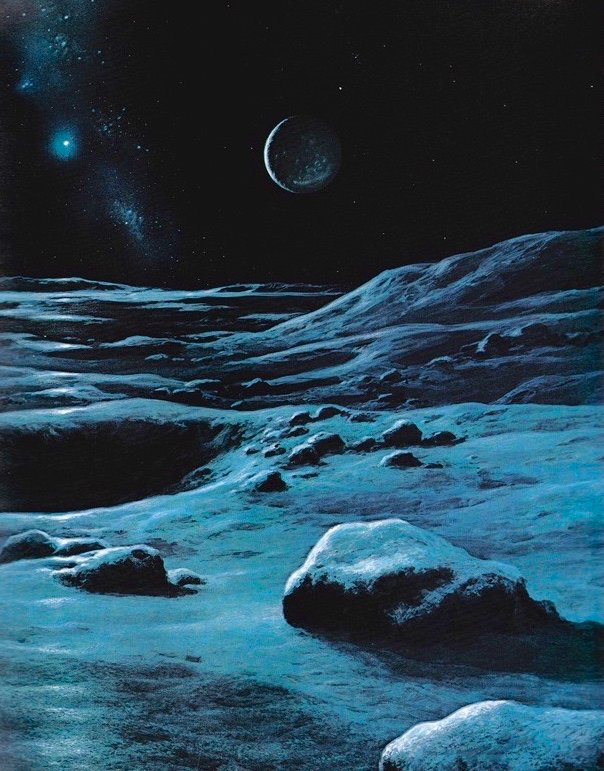


 A Box Of Chocolates